
Last updated November 15, 2026
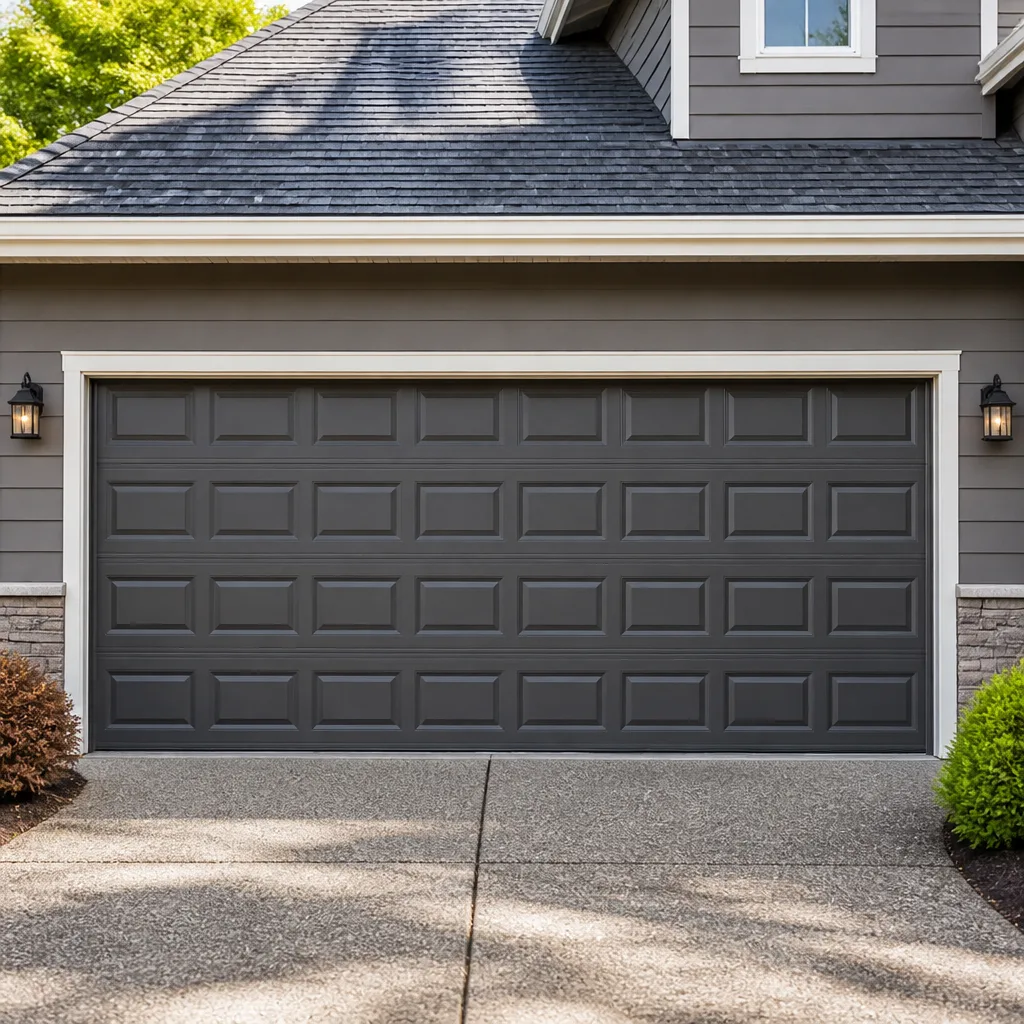 Raised-panel steel
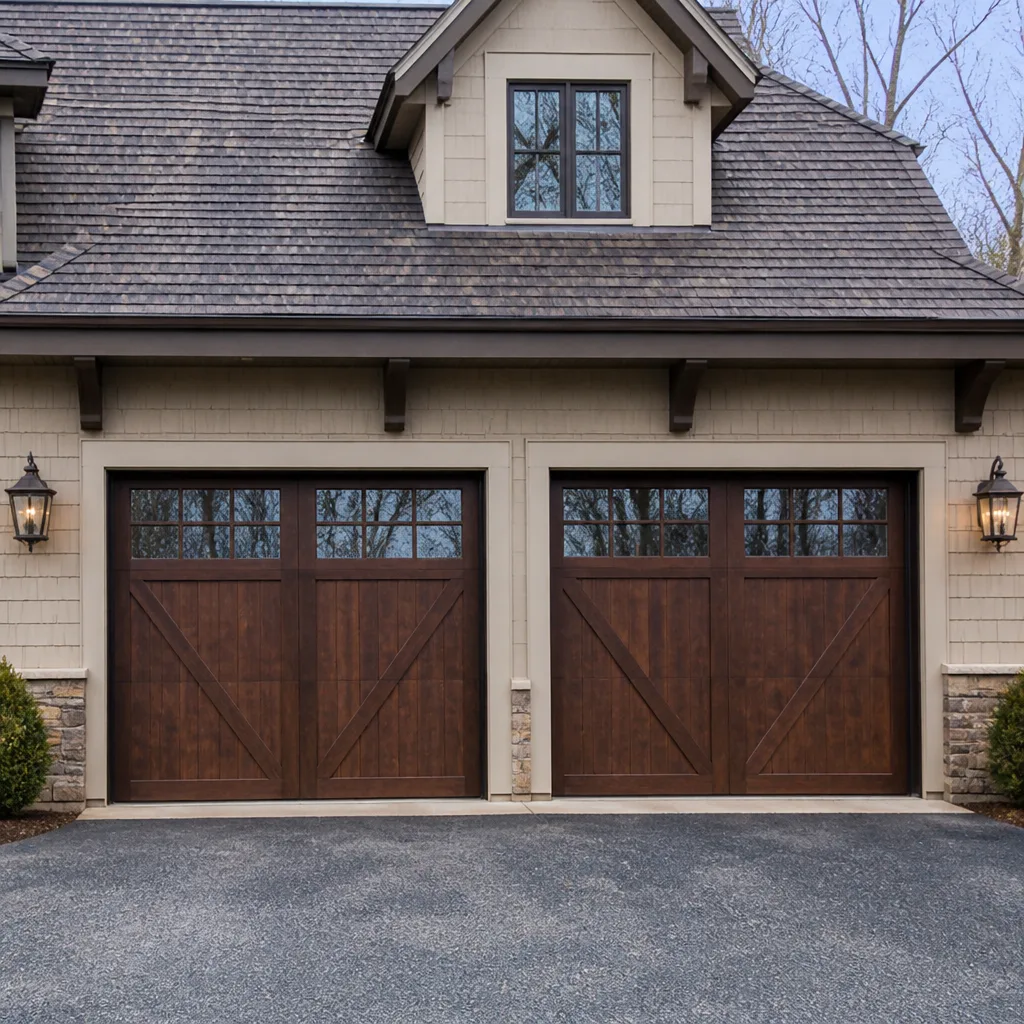 Carriage house
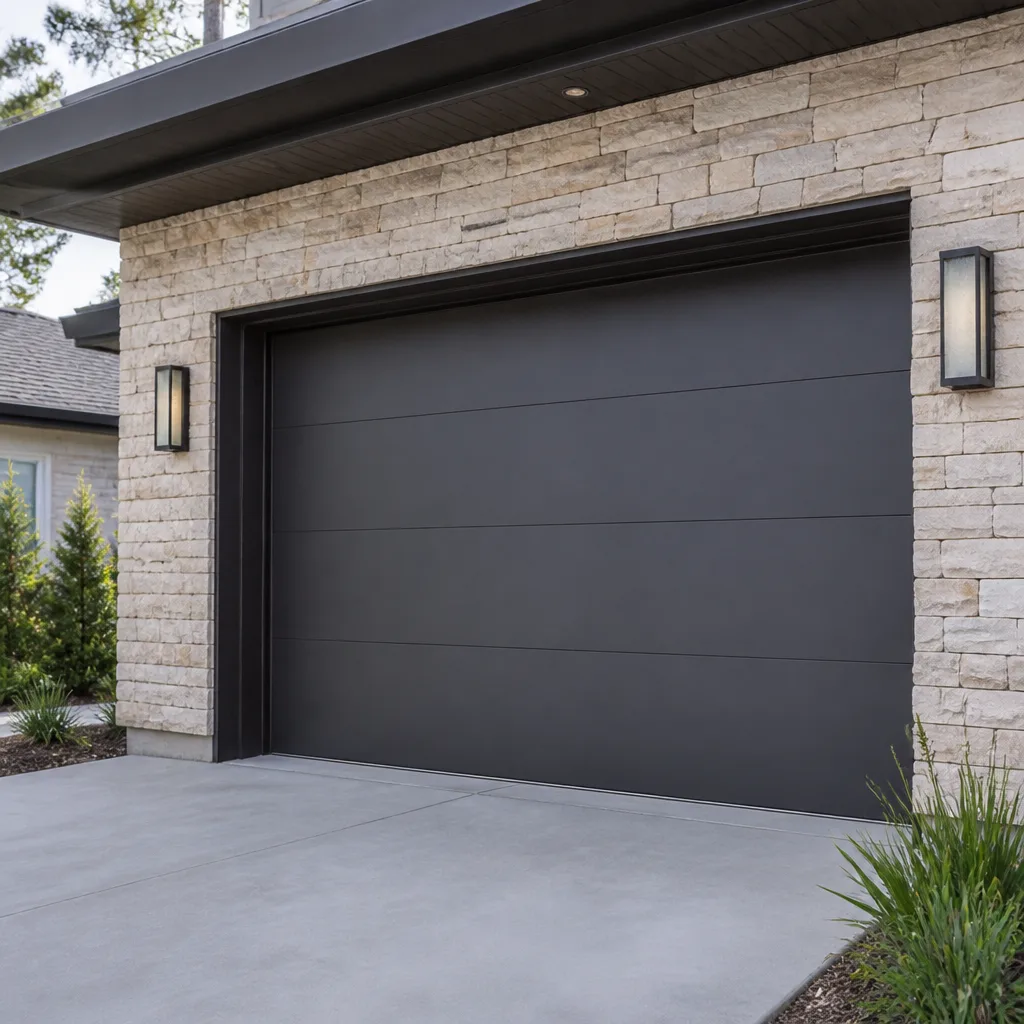 Modern flush
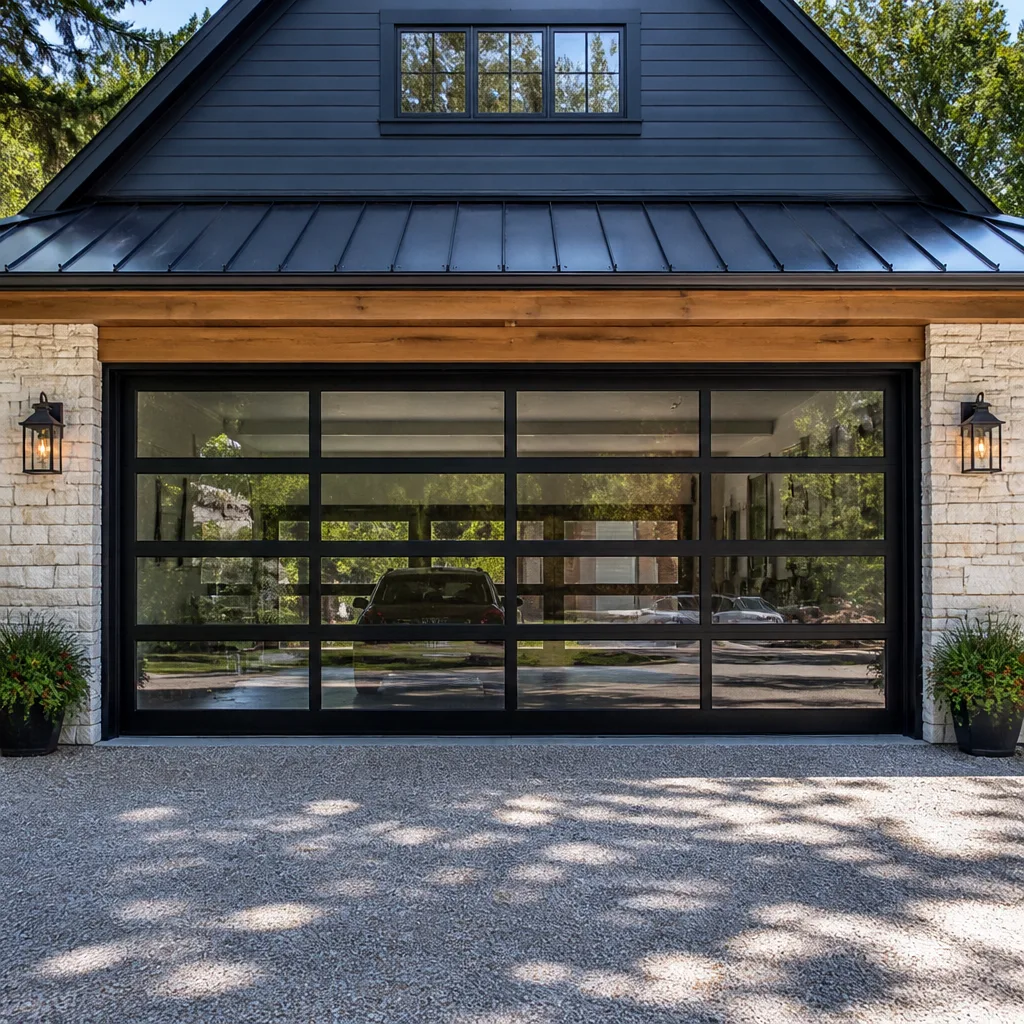 Full-view glass
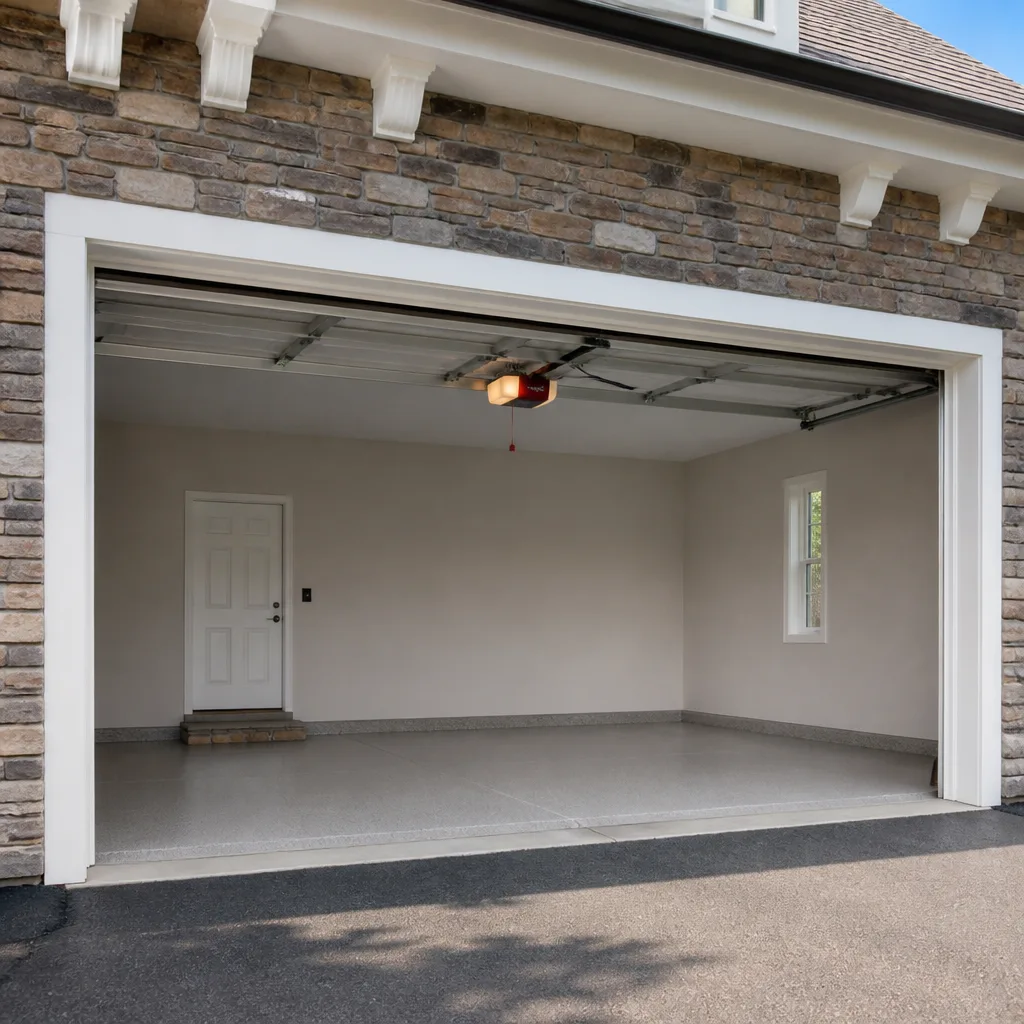 LiftMaster openers
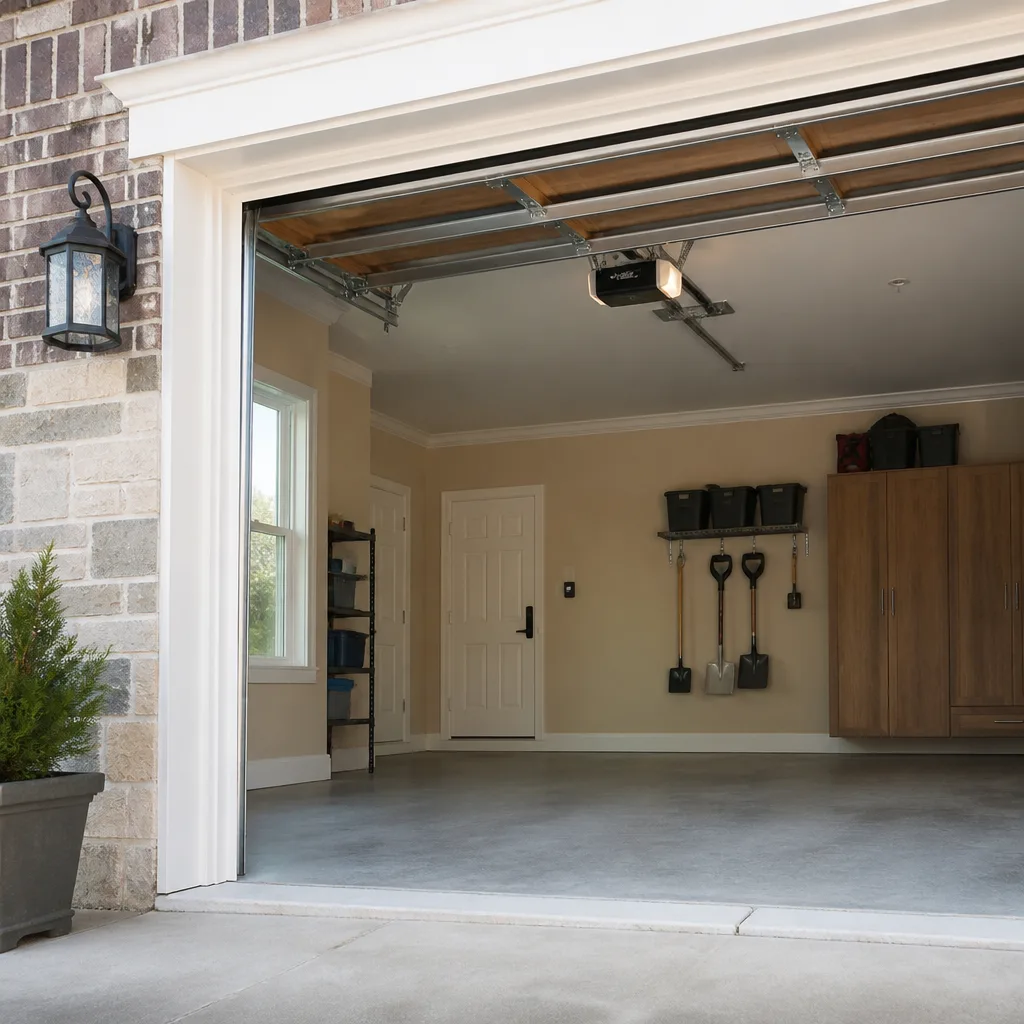 Chamberlain openers
Full 25-point door and opener safety check with every visit - springs, cables, rollers, tracks, and your LiftMaster or Chamberlain opener included
You get a price before we start. It does not change when the pro arrives.
Get your free estimateGarage Door Warning Signs: A New Bedford Homeowner’s Reference Guide
A garage door that takes two seconds longer to open than it did last month isn’t aging gracefully. It’s telling you that your opener motor is compensating for a problem somewhere else in the system, and that is a very different thing from normal wear. Most garage door failures we’re asked to sort out didn’t arrive without notice. They sent grinding, popping, sagging or rattling signals for weeks, and those signals got filed under “I’ll deal with it later.” This guide maps the symptoms to the parts behind them, sorts the nuisance noises from the stop-what-you’re-doing hazards, and gives New Bedford homeowners a severity ranking they can actually use.
Quick Answer
Movement is the key warning: a door that slows down, hesitates, jerks, hangs unevenly, or needs help to close is signaling a balance, hardware or opener problem before it becomes a failure. Anything involving a snapped spring, a door that binds in its tracks, or an opener that runs without the door moving means stop using the door and call a professional. Noises are early warnings; movement changes are late ones.
Styles & brands we work with
- Raised-panel steel
- Carriage house
- Modern flush
- Full-view glass
- LiftMaster openers
- Chamberlain openers
Table of Contents
- What the Noise Is Telling You
- Visual Signs That Mean Stop Using the Door Today
- Opener, Balance, or Hardware? Tests You Can Run Safely
- New Bedford’s Weather and What It Does to a Garage Door
- Monitor, Schedule Repair, or Stop Using: A Severity Ranking
- Why Brand Familiarity Changes the Diagnosis
- What Repair Typically Costs in New Bedford
- Common Mistakes to Avoid
What the Noise Is Telling You
Sound is the first thing most homeowners notice and the last thing they can interpret. A garage door is a stack of moving parts under serious tension, and each type of noise points to a small set of suspects. Learn to hear the difference and you’ll usually know whether you’re dealing with a routine adjustment or the early stage of a larger repair.
- Grinding during travel: usually dry or worn rollers, or a torsion bar and bearings that have lost lubrication. It often starts gradually and gets louder over weeks.
- Popping or banging, especially at open or close: this is often the torsion spring or springs. A single pop that repeats on the same motion is a symptom you don’t wait on.
- A high squeal: commonly a metal roller or a bearing running dry. Squeals are rarely an emergency on their own, but they signal friction that wears parts out.
- Loose rattling: often panel hardware, hinges or a bottom bracket that has worked loose. Sometimes it’s the opener rail.
- A one-time bang at close: often a reversing issue rather than a hardware issue. The opener is stopping harder than it should, so the door meets the floor with more force than it needs to.
Age matters here. Our technicians have up to 13 years of experience, and they’ll tell you that a noise described by the type, timing and location in the door travel narrows the cause faster than anything else. If you’re not sure where a noise is coming from, that’s a good time to get a professional set of eyes and ears on it with a free estimate from garage door repair.
Visual Signs That Mean Stop Using the Door Today
Some garage door problems are calls to book. Others are calls to stop the door where it is. The difference is usually a component that stores force, which can fail with enough energy to cause serious injury. If you see any of the following, leave the door closed and call a trained professional today.
- A bent, twisting track or a door that binds: a door that has jumped the track can come down off-balance with force. Don’t try to force it back.
- A visibly broken spring or a gap in a spring coil: this is a stop-use sign, plain and simple. High-tension springs are not a homeowner task.
- Cable fraying or a cable that has come off its drum: cables carry the door’s weight. Treating one as a simple reattach is how people get hurt.
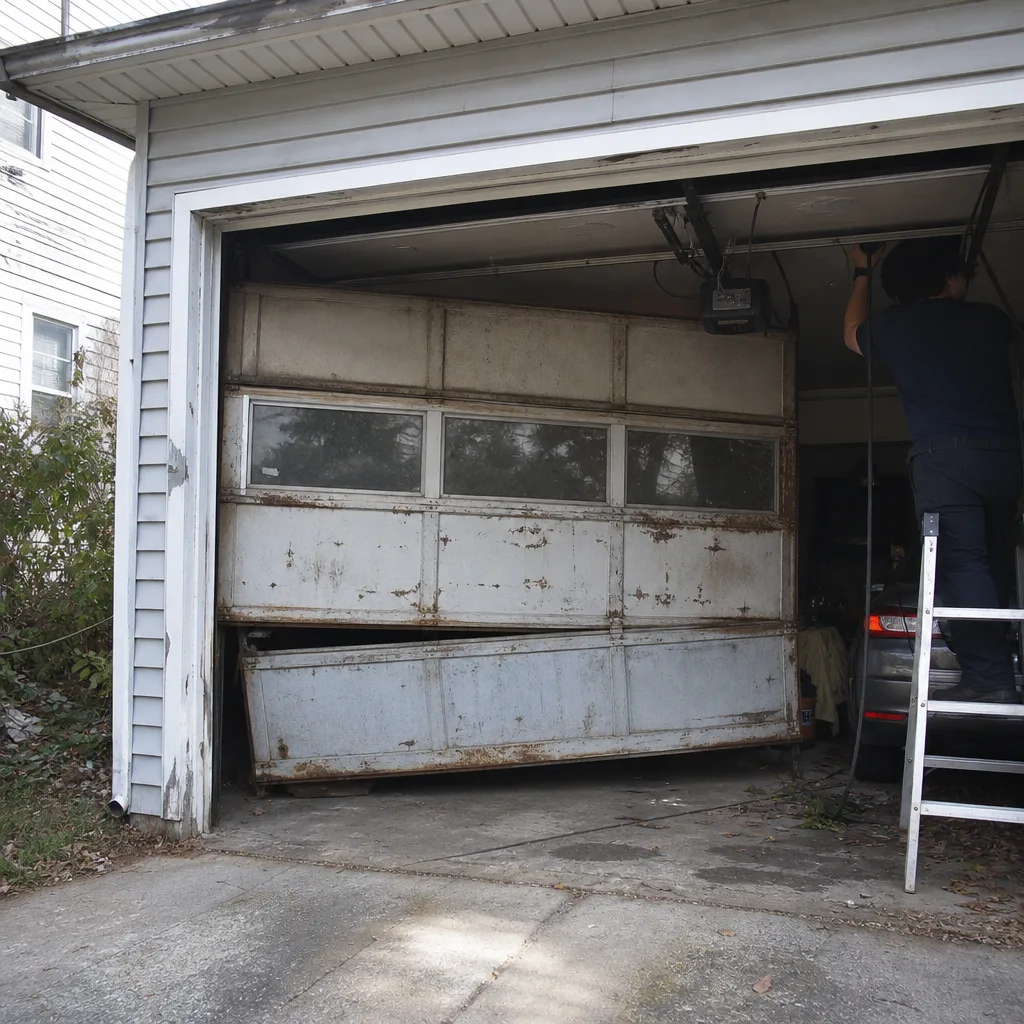
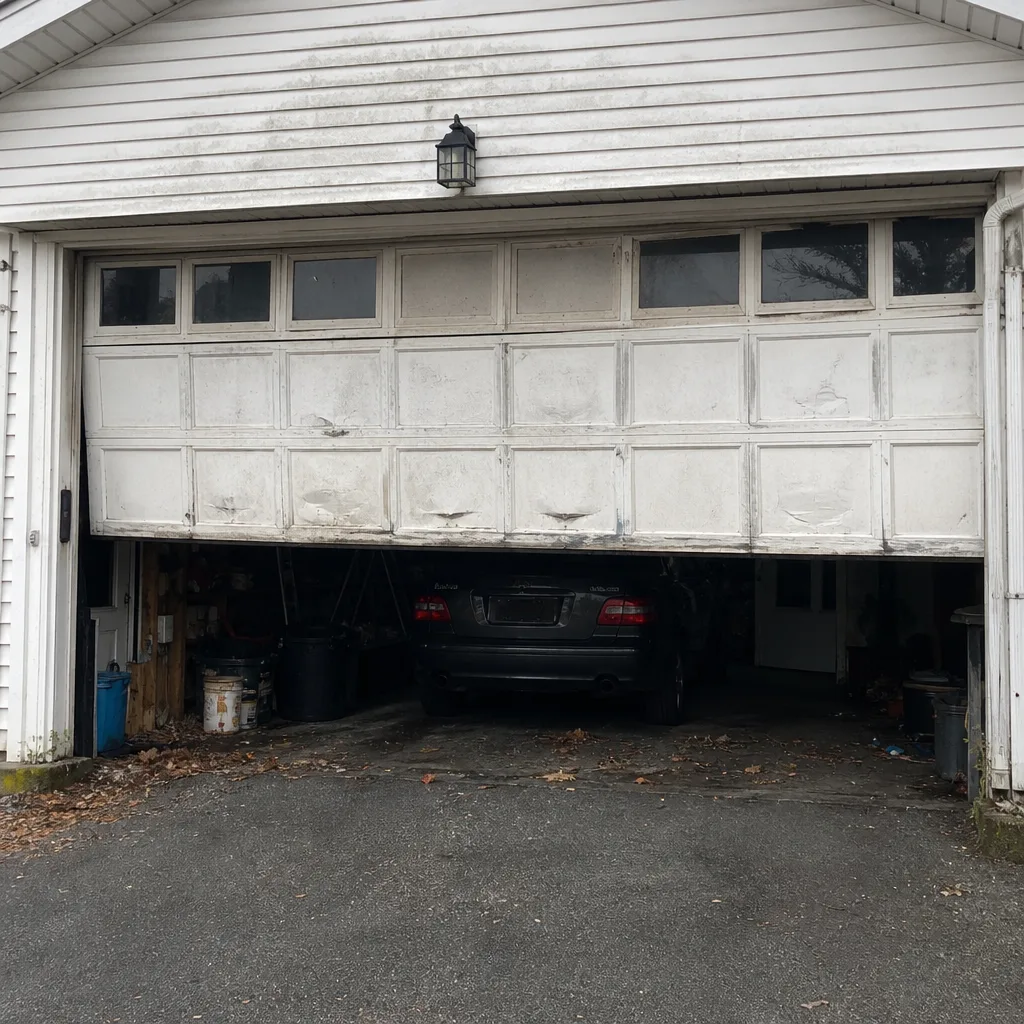
- Door panels that are sagging or separating from the stiles: the door’s structure is compromised, and its balance is at risk.
- A door that hangs unevenly on one side: sometimes a leveling issue, sometimes a hardware failure in progress. Either way, no more openings until it’s checked.
We can’t overstate this: garage door springs are the single most dangerous part most homeowners will encounter in their homes. Get the door checked by someone trained to work on high-tension hardware. If it’s winter and you’re stuck with the door down, the guide to the garage door opener repair process explains what to check on the opener side while you wait for a technician. Safety first, always.
Opener, Balance, or Hardware? Tests You Can Run Safely
A slow, struggling or reluctant door is easy to misread as an opener problem when the opener is just doing its best with a door that’s fighting it. You can sort it out without touching the springs or cables using two simple checks.
Test 1: The manual release check
- Close the door fully and pull the manual release cord to disconnect the opener.
- With the door disconnected, lift it about halfway by hand. It should feel light and move smoothly. A well-balanced door will hold roughly where you leave it.
- If the door is heavy, jerks, or refuses to sit still, you’re looking at a balance or hardware problem, not an opener problem.
- If the door glides freely but the opener stumbles, the diagnosis shifts to the opener or drive mechanism.
Test 2: The reversing check
Put a piece of wood or your foot in the door’s path and lower the door with the wall control. It should reverse on contact. If the opener runs the door down without reversing, that’s a safety setting or opener fault, and it should be treated as urgent for the obvious reason: something in the path means something gets hit.
One quick note on this second test: a failing reverse should never be treated as “it only happened once, so it’s fine.” The opener is the part of the system that stops the door, and a reversing problem on an uneven door is worse than either issue alone. If the door lurches, slows, or needs a nudge, the problem is more likely in the hardware and balance of the door than the motor, and that’s worth a proper look.
Need a diagnosis you can trust without doing anything risky? We treat the door and opener as one integrated system and never bill one part when the other is at fault. Call (855) 360-9057 for a free estimate.
New Bedford’s Weather and What It Does to a Garage Door
New Bedford’s climate is not kind to garage doors. Winter damp combined with repeated freeze-thaw cycles, a long stretch of humid summer, and steady onshore wind all work on the same components from different directions. Along the South End and the neighborhoods near the waterfront, the salt in the air adds another accelerator on the metal. So does the moisture that clings after a wet spell. Here’s what each of these produces:
- Rust staining: look at rollers, hinges and the lower part of the track. Brown streaks are the visible edge of corrosion. This wear shows up fast in milder beachside blocks.
- Seal compression and failure: the bottom weather seal takes the full brunt of winter wet and repeated thawing. A hardened or gap-ridden seal lets in water, which drives the corrosion described above.
- Cable fraying from moisture: cables exposed to repeated moisture get marginally more prone to fraying. In a New Bedford winter, that’s a real reason to watch the cables twice a season rather than once.
- Panel buckling at the bottom: a swollen, waterlogged bottom seal in a wood door can push the bottom panel out of line over a season.
These are exactly the things most homeowners miss because they show up as grime, not breakage. Our advice to anyone in New Bedford is to look at the door with real attention at the turn of each season. If you’re near the shoreline, look sooner rather than later. For more on that part of town, see New Bedford.
Monitor, Schedule Repair, or Stop Using: A Severity Ranking
A garage door gives you three levels of warning, and knowing which level a symptom sits on stops you from overreacting to a nuisance and underreacting to a hazard. Use this ranking as a mental filter before you call anyone.
Monitor (keep an eye on it, no immediate action)
- A light squeal or occasional rattle with no change in how the door moves.
- Surface rust on rollers or track that isn’t causing noise or slowing the door.
- A door taking a second longer to open or close than it used to. Note when and how often it happens.
Schedule Repair (book it, don’t push it off indefinitely)
- Grinding or squealing that has been getting louder week by week.
- A bottom seal that’s cracked or letting water in during rain.
- A door that closes harder than it should, banging on contact.
- An opener that reverses slowly or seems to struggle but still fully opens and closes.
Stop Using (leave the door where it is)
- Any broken spring, visible or suspected.
- A bent track or a door off its guide.
- A visibly sagging panel or a door that hangs visibly uneven.
- Frayed or detached cables.
- An opener that runs with the door staying put, or a door that reverses without reason.
When in doubt, drop down a level. A one-day delay on a scheduled repair costs you an appointment slot. A one-day delay on a stop-using symptom is a different proposition entirely.
Why Brand Familiarity Changes the Diagnosis
Brand knowledge isn’t a marketing point on a guide like this. It changes how fast a tech finds the problem. A LiftMaster or Chamberlain opener has a slightly different reverse-set routine than a Genie. A Wayne Dalton door may have a different panel and hardware layout than an Amarr model. If the technician is learning your door as they go, the diagnosis takes longer and they’re more likely to guess at a fix instead of naming one.
That’s why we focus on the eight brands that show up in most driveways here: LiftMaster, Chamberlain, Genie, Clopay, Amarr, Wayne Dalton, Craftsman and Raynor. It means a technician arriving at a Wayne Dalton door or a Craftsman opener isn’t seeing it for the first time. Add a repair and installation background on the same system, and you get an honest recommendation on fix-versus-replace. We’re not pointing you toward a replacement because it’s the only option we can offer. We’re pointing you toward whatever is genuinely the right call, and we say which.
What Repair Typically Costs in New Bedford
Garage door repair in New Bedford typically falls into a few recognizable price bands. These are estimates based on the ranges in our local market, and the written estimate you receive sets the final price. That price is quoted and agreed before any work starts, so there are no surprises at the end of the job.
- Single spring replacement: typically $230-$390.
- Spring pair replacement: springs are usually replaced in matched pairs, so this runs about twice the single-spring range, roughly $460-$780.
- Opener repair: typically $120-$280.
- Opener replacement: typically $280-$540.
- Cable replacement: typically $150-$320.
- Bottom seal replacement: typically $90-$180.
- Roller and hinge replacement: typically $110-$240.
Why the spread? A door with one worn roller and clean tracks is a simple repair. A door that hasn’t been serviced for years, that has rusted hardware and a failing opener, is a different job. The range is there to give you a realistic band so you can budget, not to lock in a number. Call (855) 360-9057 for your free estimate and the exact figure for your door.
Common Mistakes to Avoid
- Treating a slow door as “just age.” A door that moves more slowly than last month is a system telling you something. Age doesn’t change speed abruptly, and treating it that way lets a balance problem get worse.
- Greasing the track instead of the moving parts. The track isn’t where the friction should go. Lubricant belongs on the rollers, hinges and springs, not piled onto the channels.
- Trying to fix a torsion spring. This is the mistake that lands people in the emergency room. Even old hands stop when they should. Springs are not a homeowner job in any weather.
- Adjusting the opener to compensate for a binding door. You’re hiding the problem, not solving it, and you’re masking a reverse-force setting that needs to stay at its safe level.
- Ignoring the bottom seal in a wet climate. In New Bedford, a compromised bottom seal is the entry point for water that goes on to ruin hardware over a winter or two.
- Replacing the door when repair would have done. It’s the most expensive mistake in the list, and it’s an easy one to make when a generalist handyman can’t diagnose the actual failing part.
- Assuming “it has always been fine” is the same as “it’s fine now.” A garage door works until it doesn’t. So does the brake on the car.
See the difference
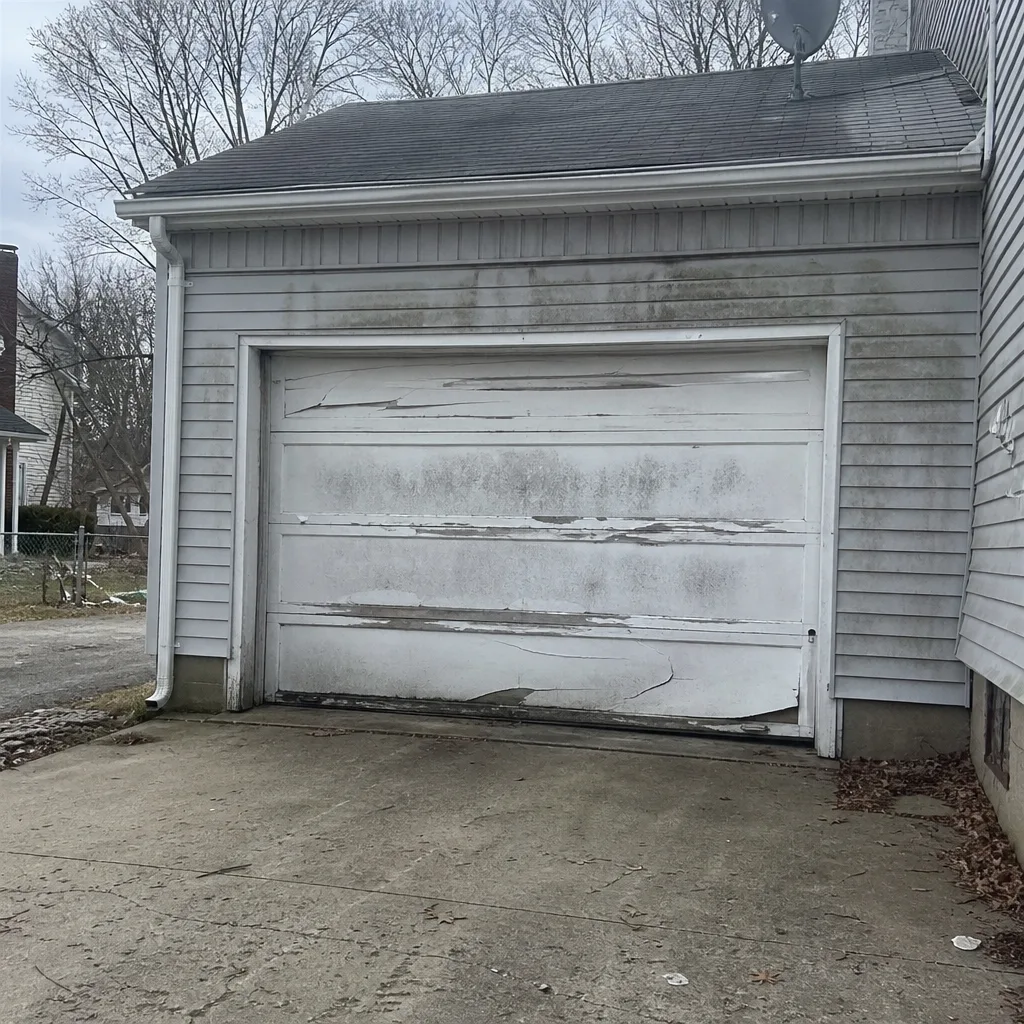 Before
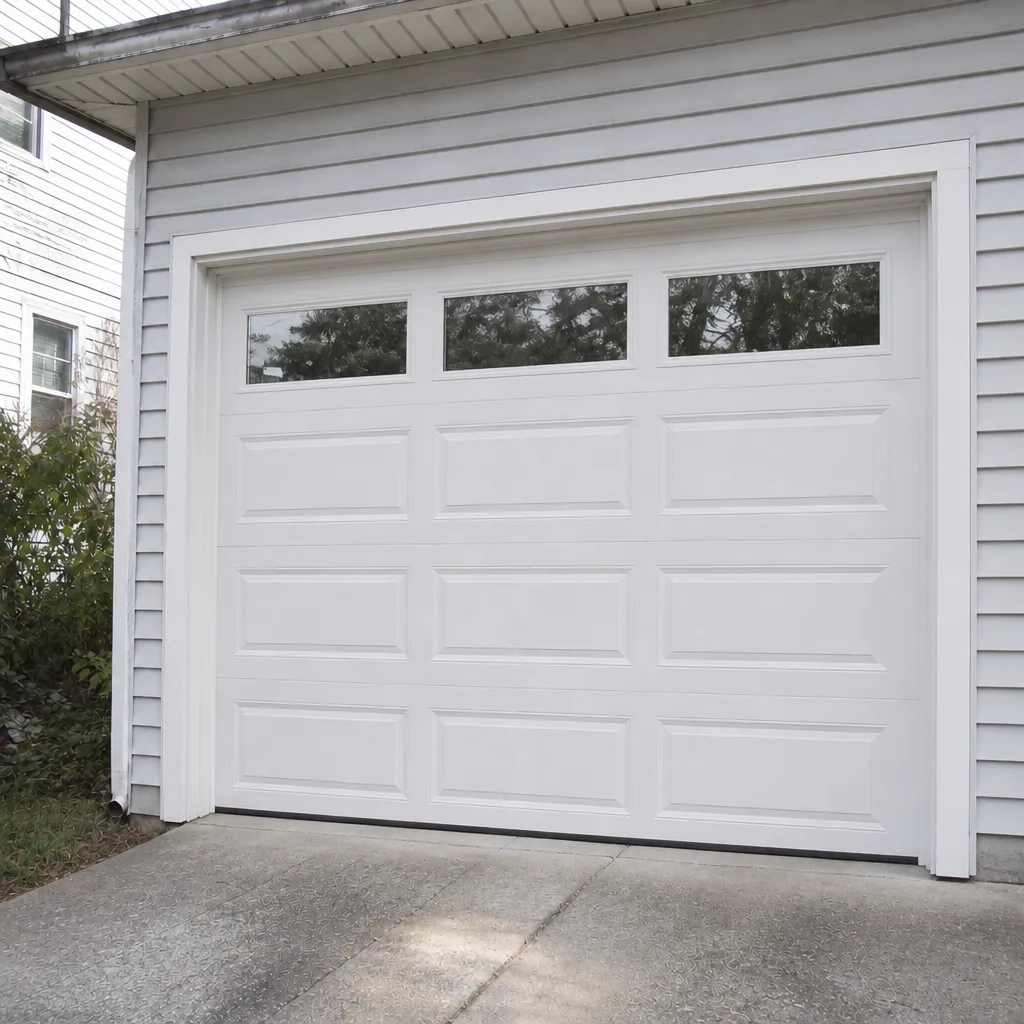
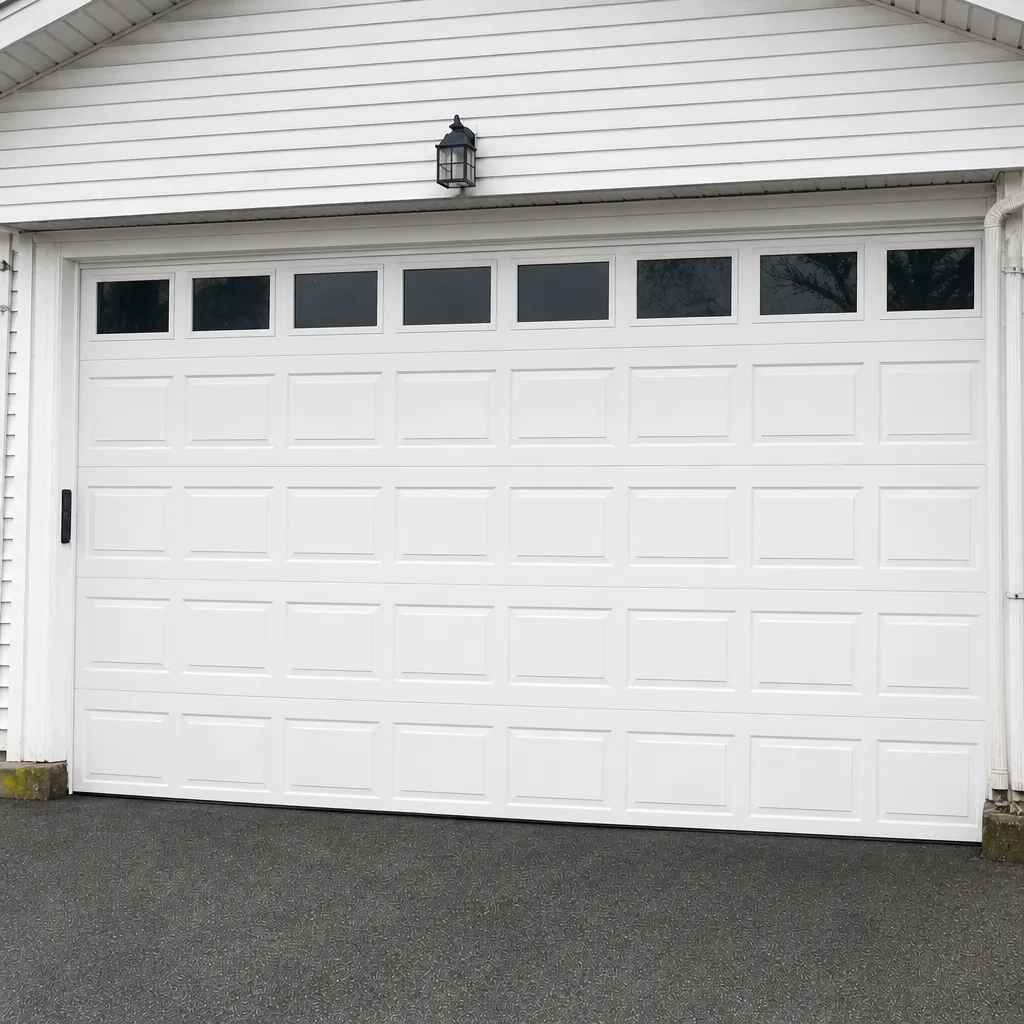
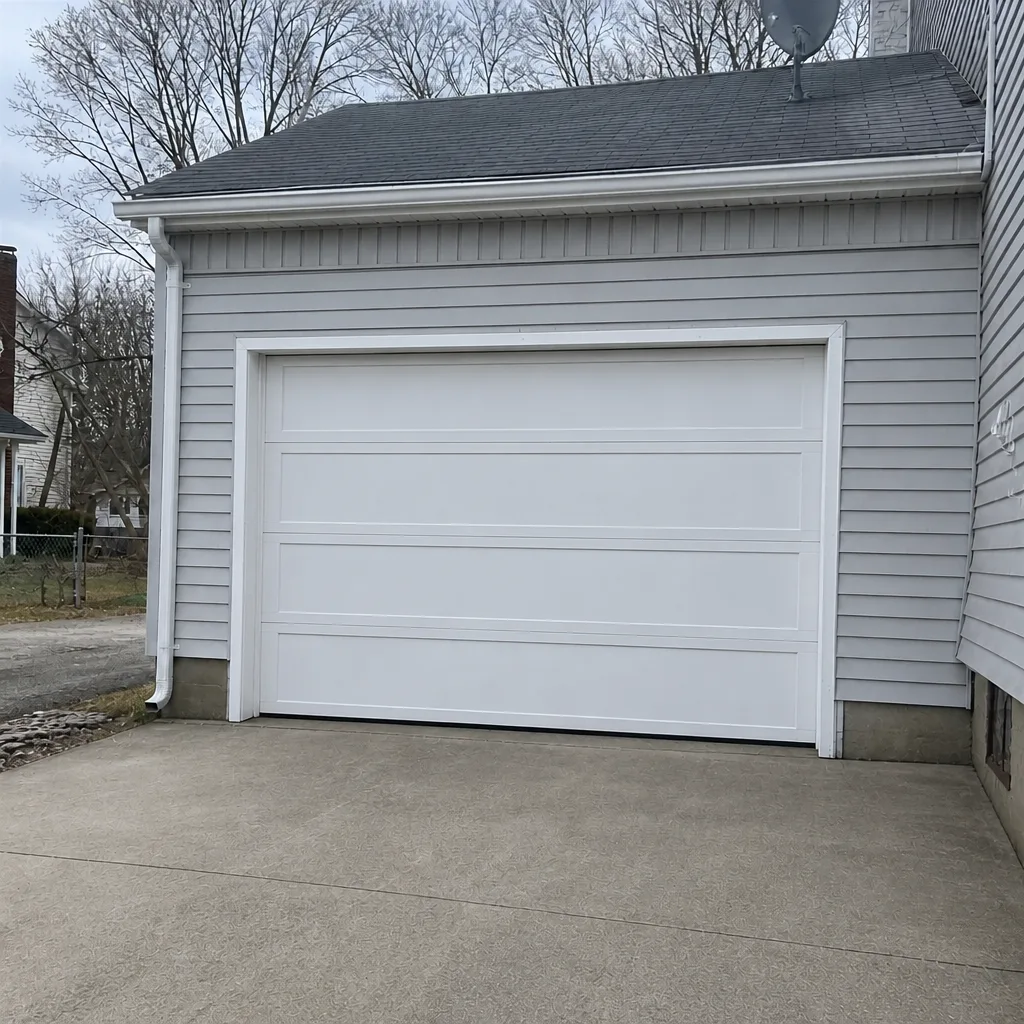 After
 Before
 After
 Before
 After
When to Call a Professional
Call us when the door does any of the following: it binds, hangs uneven, reverses without a reason, comes down harder than it used to, or makes a grinding or popping noise that has gotten worse. Also call if you see a broken spring, a bent track, a sagging panel or frayed cable, and don’t operate the door in the meantime. Small fixes you can handle yourself, but these aren’t them. The other scenario worth a call: you’re just not sure. A free estimate is the cheap way to find out whether you have a nuisance symptom or an impending problem. Glacier Garage Door Repair offers free estimates in New Bedford. Call (855) 360-9057. We answer 24/7. Fast dispatch from 7am to 7pm, Sunday through Friday.
Frequently Asked Questions
The most common are a door that moves more slowly than it used to, grinding or squealing noises, a door that hangs uneven or doesn’t fully close, and rust or seal wear from the local freeze-thaw cycles. Those first four are usually early warnings you can book for. A broken spring, bent track or frayed cable is a stop-using sign. Call (855) 360-9057 for an exact quote, and the estimate is free.
Sometimes yes, sometimes no. It depends on the type of noise and whether it’s accompanied by a change in movement. A light squeal alone is usually routine friction. A grinding noise that’s getting louder, or any popping from the springs, is a repair to schedule rather than monitor. Call (855) 360-9057 for a free estimate and we’ll tell you which it is.
No. A garage door spring stores enough energy to cause serious injury, and it takes trained hands and the right tools to replace it safely. Leave it closed and call for help. Call (855) 360-9057 for the next available appointment.
This usually means the door’s balance or hardware is at fault and the opener is compensating. Run the manual release test: if the door is heavy or fights you when disconnected, the problem is in the door, not the motor. Call (855) 360-9057 to book a diagnosis.
At least once a season, and more often in New Bedford if you’re near the waterfront. Freeze-thaw winters and humid summers are hard on seals, rollers and cables in this climate. A quick two-minute check with the same list each time catches most problems before they get expensive. Call (855) 360-9057 if any check raises a flag, and the estimate is free.
Often yes for common repairs like a spring, roller or opener issue, depending on parts availability and dispatch. A full replacement or a special-order panel will be scheduled. If you call outside dispatch hours, we’ll book you into the next opening, Sunday through Friday, 7am to 7pm. Call (855) 360-9057 for the fastest answer.
The Bottom Line
Most garage door failures send signals for weeks. The three you should listen for hardest are changes in movement, new or worsening noise, and anything involving springs, cables or tracks. Sort each symptom into monitor, schedule repair, or stop using, and you’ll handle the safety side correctly without overreacting to routine wear. New Bedford’s wet winters and humid summers make seals, rollers and cables worth checking every season. When you need a trained eye on it, Glacier Garage Door Repair is here. We work on the door and the opener as one system, on the brands in most driveways. Call (855) 360-9057. We answer 24/7. Fast dispatch from 7am to 7pm, Sunday through Friday. Free estimates, and the price is quoted and agreed before any work starts.
Written by the team at Glacier Garage Door Repair.