
Last updated November 15, 2026
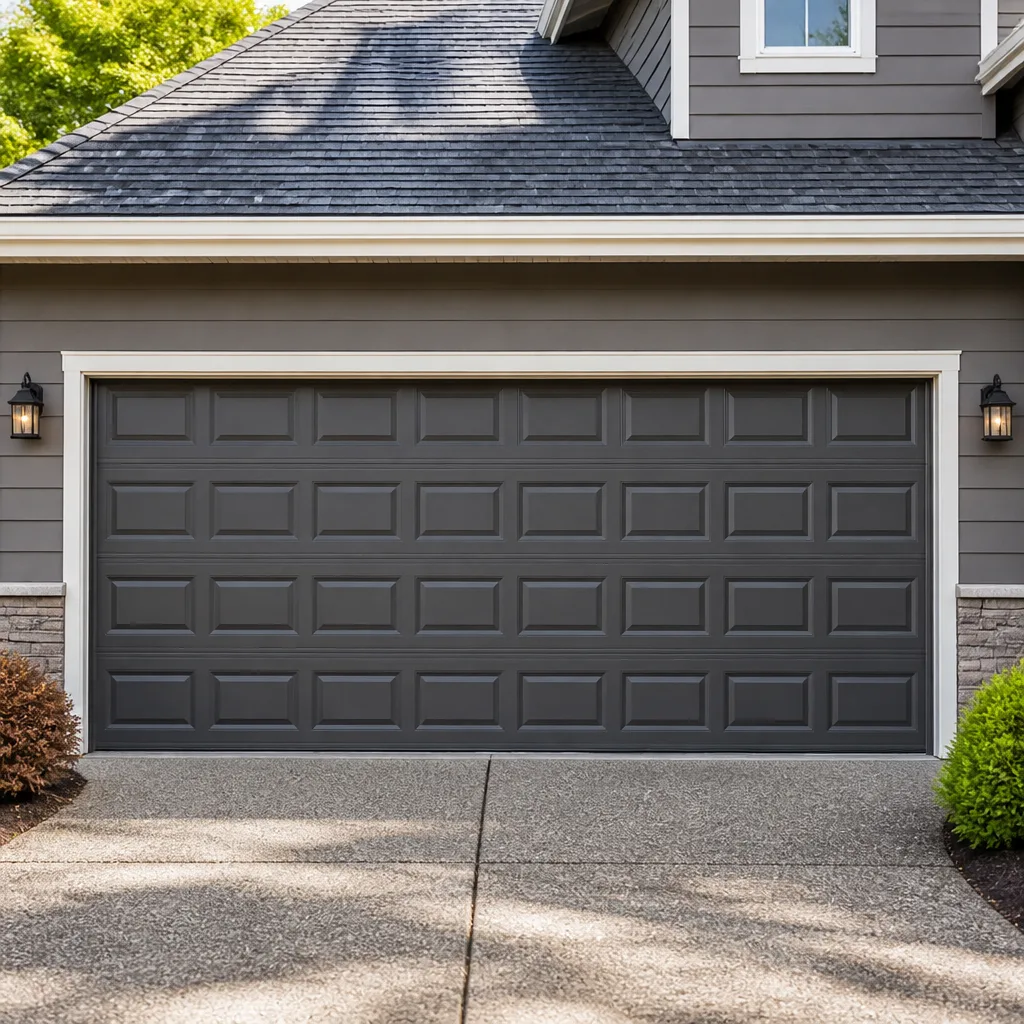 Raised-panel steel
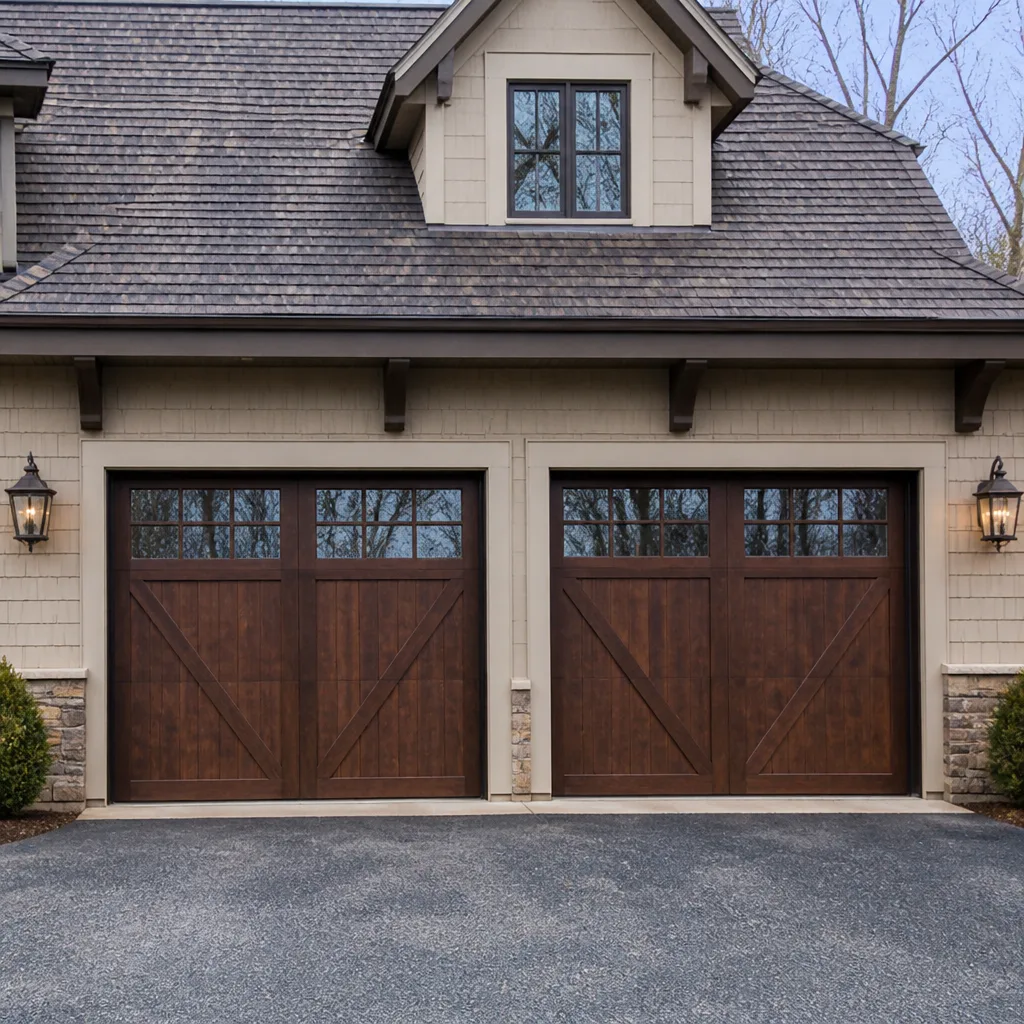 Carriage house
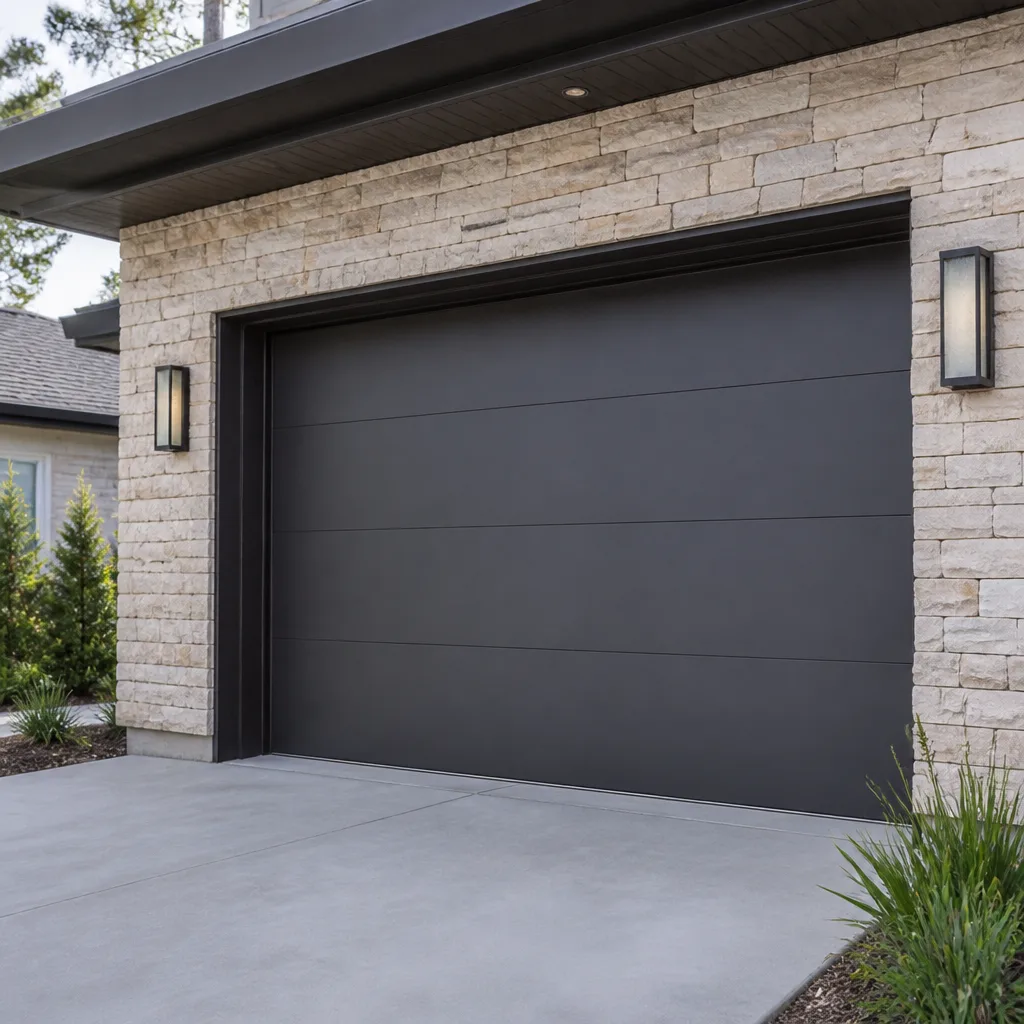 Modern flush
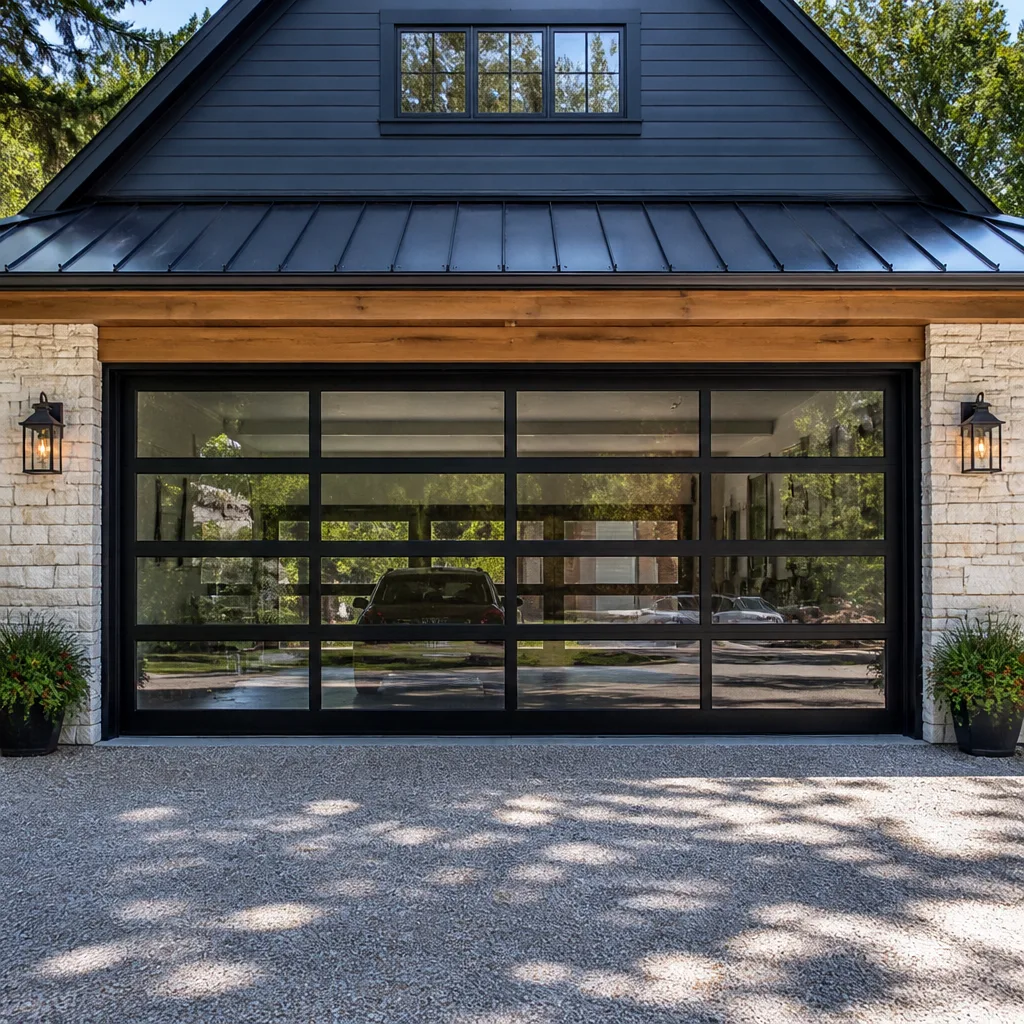 Full-view glass
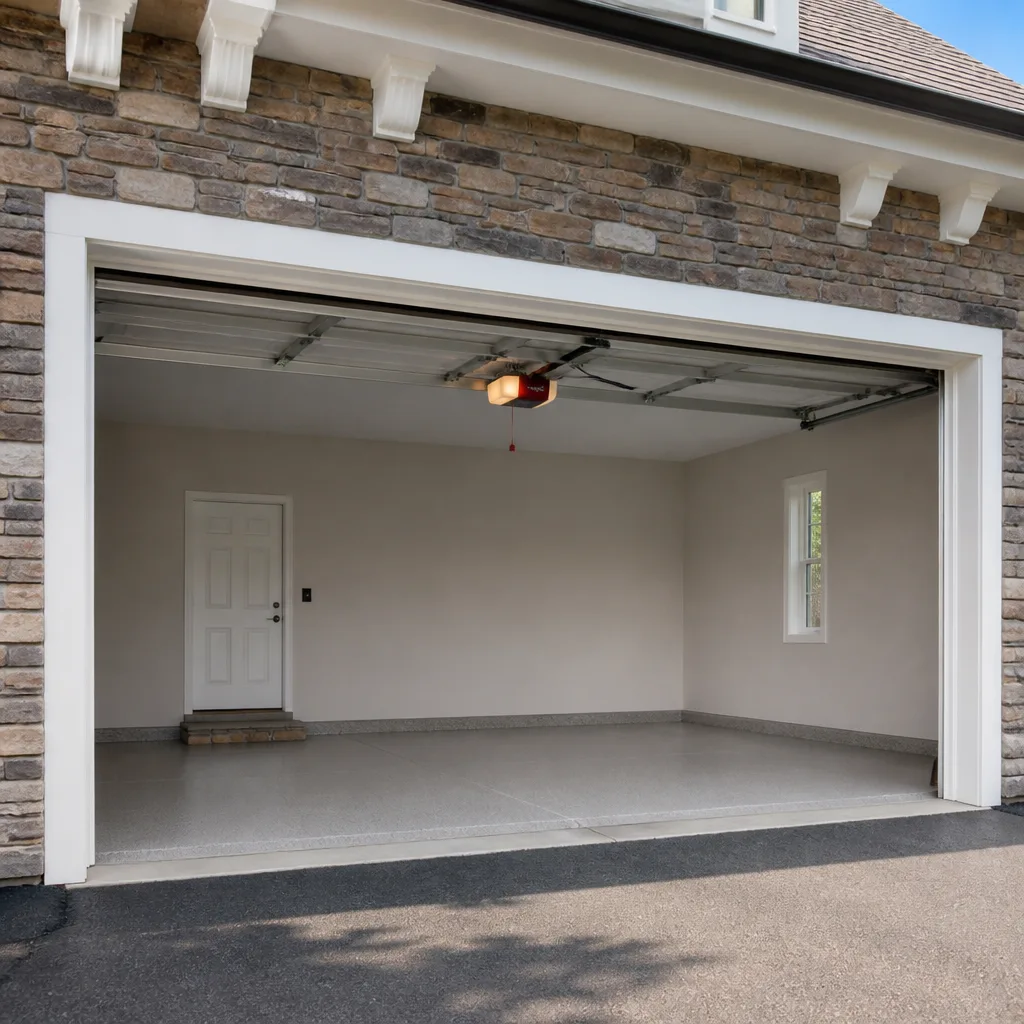 LiftMaster openers
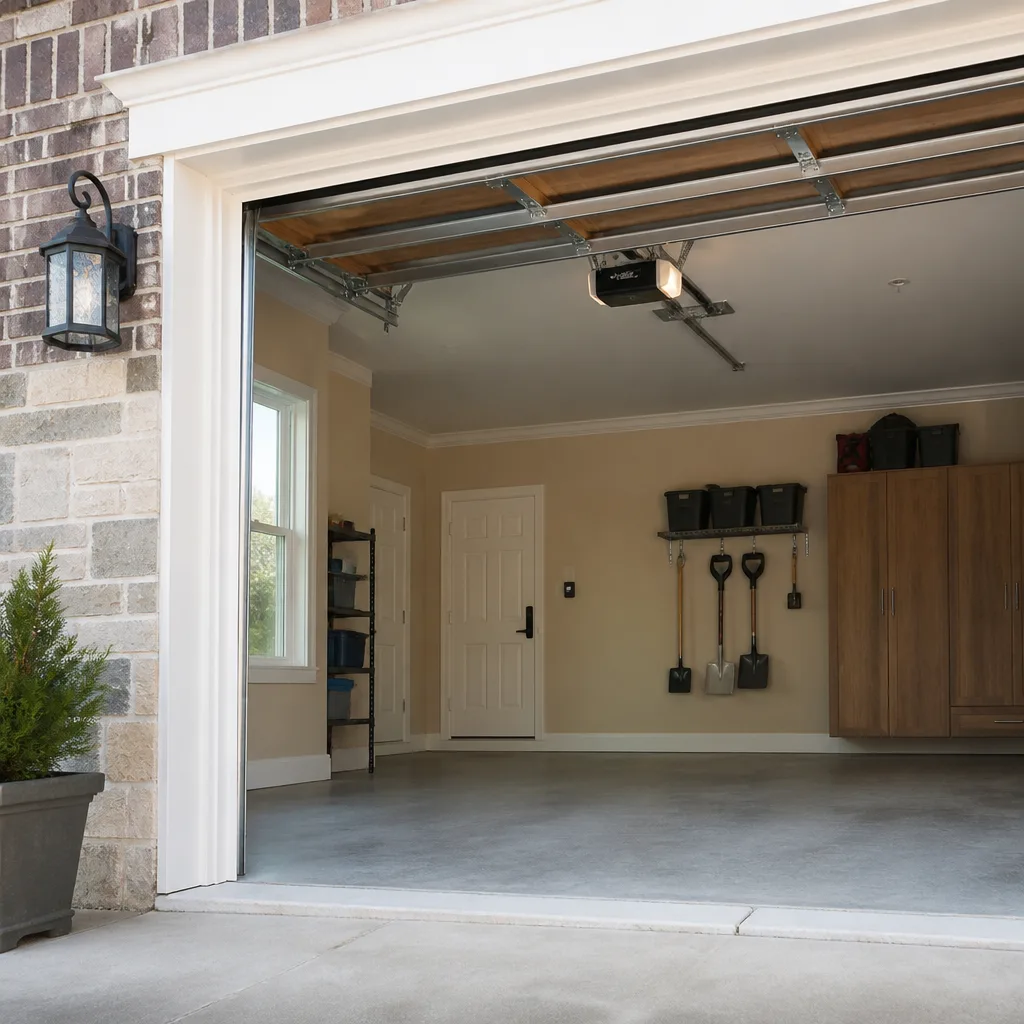 Chamberlain openers
Full 25-point door and opener safety check with every visit - springs, cables, rollers, tracks, and your LiftMaster or Chamberlain opener included
You get a price before we start. It does not change when the pro arrives.
Get your free estimateGarage Door Repair Troubleshooting in New Bedford: Common Problems and How to Fix Them
A garage door that reverses before closing isn’t broken. It’s talking to you. So is the door that shudders halfway up, the one that grinds like a coffee can full of screws, and the one that opens fine in the morning and won’t budge by evening. The trouble is that most homeowners don’t know the language, so they guess, they spray something on it, they hold the button longer, and the real problem keeps getting worse in the background. Nearly every garage door failure traces back to one of four root causes: mechanical wear, misalignment, opener signal failure, or weather-related swelling. Learn to sort your symptom into the right category and you’ll cut diagnosis time in half. This guide shows you how to read your door like a technician in New Bedford, and, just as importantly, where to stop.
Quick Answer
Most garage door problems in New Bedford come down to mechanical wear (springs, rollers, hinges), misalignment (tracks, panels, sensors), opener signal failure (remotes, logic board, safety reversal), or weather-related swelling of wood and seals through humid summers and freezing winters. You can safely handle some of these yourself: sensor alignment, track cleaning, and remote battery and signal checks. Anything involving torsion springs, cables, or the opener’s internal wiring belongs with a trained technician, because those parts hold enough stored force to cause serious injury.
Styles & brands we work with
- Raised-panel steel
- Carriage house
- Modern flush
- Full-view glass
- LiftMaster openers
- Chamberlain openers
Table of Contents
- Symptom-to-Cause Map: What Your Door Is Telling You
- The Reversing Door: Sensor, Setting, or Obstruction?
- Grinding, Popping, and Scraping: Matching Sound to Part
- How New Bedford Humidity Attacks Springs and Brackets
- Problems That Fix Themselves (and Why That’s Bad News)
- Opener and Remote Failures: Signal Problems vs. Dead Motors
- The Stop-Here List: Where DIY Ends
- What Garage Door Repairs Typically Cost in New Bedford
Symptom-to-Cause Map: What Your Door Is Telling You
Start by listening, then by watching. A garage door gives you two channels of information: the sound it makes while moving and the way it moves. Match what you observe to a category and you’ve already narrowed the problem to a handful of parts before anyone touches a wrench. In our experience, homeowners who can describe the symptom accurately on the phone get a faster, cleaner repair because the technician arrives knowing what to check.
Here’s the mapping we use on the job:
- Loud grinding while the door moves points to rollers, hinge pivots, or a dry torsion shaft. Worn steel rollers in an older Craftsman door are a frequent culprit.
- A sharp pop or bang, then the door won’t lift almost always means a broken torsion spring. Stop operating the door.
- Scraping along one side suggests the door has shifted in its track or a panel is out of square.
- Rattling that’s worse at certain heights usually traces to loose hinge bolts or a slack chain on a chain-drive opener.
- Door reverses immediately or stops partway sits in the opener signal and safety-reversal category, covered further down.
- Door feels heavier than usual when disconnected from the opener tells you the problem is balance (springs), not the motor.
- Door sticks in humid weather, then frees up in dry weather is weather-related swelling of wood sections or seals.
Write your symptom down, note when it happens (cold mornings, humid afternoons, right after the opener runs), and keep the door closed until you understand the cause. A misaligned door forced repeatedly will bend panels, and a broken spring operated by an opener will burn out the motor. That’s how a small repair turns into a big one. A quick call to Glacier Garage Door Repair can sort the category for you before anything gets worse.
The Reversing Door: Sensor, Setting, or Obstruction?
A door that reverses before it touches the floor is running its safety system. The door thinks something is in the way. There are exactly three reasons this happens: a misaligned or dirty safety sensor, a sensitivity setting that’s too aggressive, or an actual obstruction in the door’s path. Sorting between the three takes about two minutes if you know where to look.
The safety sensors are the small lenses near the floor on each side of the opening, usually with an amber and a green indicator light. When the lenses are aimed at each other, both lights stay solid. When something breaks the beam, the sending unit’s light flickers or goes dark. Here’s the safe check:
- Look at both sensor lights. If one is dark or blinking, the beam isn’t landing on the receiver.
- Wipe both lenses with a dry cloth. Dust and cobwebs are common enough that this alone solves a surprising share of reversing-door calls.
- Gently adjust the sensor bracket until both lights hold steady. Only the sensor housing should move; don’t bend the track.
- Check the path for anything the beam could be catching: a rolled-up mat, a snow shovel leaning against the wall, a bike tire at the edge of the opening.
- If the door still reverses with a clear, aligned beam, the opener’s close-force or travel-limit setting is likely the cause, and that’s an opener adjustment rather than a sensor problem.
Some doors have a second safety layer: a mechanical reversal on contact, where the door meets light resistance and goes back up. If the door reverses only on the last few inches, a swollen threshold seal or a slight floor hump can be the trigger. In New Bedford, wooden bottom seals that have soaked up months of damp air often swell just enough to trip that contact reversal. A technician can confirm the safety system is functioning correctly, not just that the door stays down. For a focused diagnosis of the motor side, our garage door opener repair page lays out the specifics.
Grinding, Popping, and Scraping: Matching Sound to Part
The sound a garage door makes is a diagnostic tool, and most homeowners describe it too vaguely (“it’s noisy”) for anyone to help. Precision here is worth the effort. Grinding, popping, and scraping each come from a different place on the door, and each has its own likely fix.
Grinding
Grinding is metal on metal, almost always at the rollers or hinges. Steel rollers wear flat spots and start grinding against the track as they pass through curved sections. Hinges with dry pivots do the same. Before assuming the worst, look at the rollers: nylon rollers run quieter and are standard on newer Clopay and Amarr doors, while older steel rollers on a twenty-year-old door are candidates for replacement. A dry torsion shaft can also grind, and that’s a lubrication and inspection job for a technician.
Popping
A single loud pop followed by a door that won’t lift is the classic broken spring. A repeating pop or snap as the door travels is different. It often means a hinge has loosened at one screw and is shifting under load, or a panel joint has opened slightly and is catching on the jamb. Repeating popping that grows louder over weeks is the door working itself out of alignment.
Scraping
Scraping is contact between the door and something fixed: a track, the frame, or the floor. It’s a misalignment symptom, and it’s the one you shouldn’t ignore for long. A scraping door is moving outside its intended path, which puts stress on panels, cables, and the opener’s drive mechanism all at once.
One caution before you reach for the spray can: lubricating the wrong parts can make things worse. Never apply lubricant to the tracks themselves, because the rollers are meant to roll, not slide. Grease in a track attracts grit and turns a simple roller swap into a track replacement. Clean the tracks, and let a technician lubricate the springs, hinges, and bearings with the right product. If the noise is coming from a Wayne Dalton door with its proprietary torsion system, don’t improvise; those are built differently enough that guessing causes damage. Our garage door repair service covers the full door and hardware, so the fix matches the actual part.
How New Bedford Humidity Attacks Springs and Brackets
New Bedford’s summers are humid, and its winters swing below freezing. That cycle is hard on garage door steel, and the parts that suffer first are the ones you can’t see: the torsion springs and the bottom brackets. The humidity doesn’t just make things damp; it repeatedly condenses on cold steel, dries, and condenses again, and each cycle nudges corrosion forward. Then winter freeze-thaw cycles work moisture into the same seams. Over seasons, a healthy spring can develop the kind of surface rust that eventually becomes a fracture point.
Early corrosion has a look. Check for it:
- Orange-brown speckling on the coils of your torsion spring or the wire loops of your extension springs.
- Powdery residue on the spring coils, which is rust blooming rather than surface dirt.
- Rust streaks running down from the bottom brackets where they meet the door panel.
- Fuzzing at the cable ends, where individual wire strands start to separate and look frayed.
- Staining around bolt heads on the hinges and bottom fixtures, a sign moisture is sitting in the joints.
What to do when you spot early corrosion: keep the door’s movement smooth, keep moisture out where you can, and get a professional inspection before the rust becomes a break. A technician can assess whether a spring has lost enough cross-section to be a real risk. Do not sand, paint, or treat a torsion spring yourself to slow the rust down; the spring is under extreme tension and any work on it requires proper tools and training. The same rule applies to cables and bottom brackets, both of which can release stored force without warning.
Wood doors, and Wayne Dalton or Amarr models with wood-composite sections, also swell in humidity. A panel that swells a fraction of an inch can bind against the jamb, scrape, and throw off the door’s balance. If your door only sticks in humid weather, weather-related swelling is the category, and a professional adjustment or section repair is the fix, not more force on the opener.
Problems That Fix Themselves (and Why That’s Bad News)
A door that fails once and then works normally for a week feels like a non-problem. It isn’t. Self-resetting failures are how most garage door emergencies announce themselves, and the pattern behind them is consistent: something is degrading in a way that only sometimes crosses the failure threshold. The problem is still there. It’s just intermittent. Here’s what tends to hide behind a “it fixed itself” story:
- A failing safety sensor. Sunlight hits the receiver at certain times of day, or a loose wire makes contact intermittently. The door works when the angle or the connection happens to line up.
- A weak spring near the end of its life. In cool weather the door is just light enough to lift; in warm weather it isn’t. The spring is worn, not seasonal.
- An opener with a failing logic board or capacitor. The motor starts, overheats, and stops; later it starts fine again. Intermittent starts are an electronics symptom.
- A loose or chattering safety-reversal mechanism. The door bounces off a small obstruction in one position but clears it in another.
- A remote or wall button with a bad connection. The signal gets through sometimes. That’s a wiring or battery symptom, not a door symptom.
Treat an intermittent problem as an active problem. Note the conditions: time of day, weather, whether the remote or the wall button was used, the height at which the door stalled. Then have it inspected before it becomes a real failure, and before it strands the household on a morning when the garage is the only way out. In New Bedford, where the garage is often the main entry point through winter, an intermittent fault is not something to gamble on.
Opener and Remote Failures: Signal Problems vs. Dead Motors
When the door won’t respond, the question is whether the opener isn’t getting the command or isn’t acting on it. Get that sorted and you’ve cut the problem space in half. Signal problems start at the remote, get repeated at the wall button, and end at the receiver in the opener’s head unit. Motor problems show up as noise, heat, or a motor that hums without moving the door.
Signal Problems
- Remote battery. The most common cause. Replace it and test again.
- Remote pairing lost. A power surge or a new opener can drop the code. Re-pair per the opener’s manual.
- Lock or vacation mode engaged. Many openers have a control that disables remote operation. Check the wall console.
- LED bulbs or interference. Some LED bulbs and nearby electronics interfere with remotes. Test with the wall button; if that works and the remote doesn’t, suspect the remote or interference.
- Antenna or receiver issue. A dangling or damaged antenna wire or a failing receiver board blocks the signal at the source.
Motor Problems
- Motor hums but the door doesn’t move. The drive is jammed or the door is off-balance and stalled.
- Motor runs but chain or belt doesn’t. A stripped gear, a broken chain, or a slipping tensioner.
- Opener shuts off after a few seconds. Overheating, failing capacitor, or a bad logic board.
- Door slams shut or comes up short. Travel-limit and force settings need adjustment.
LiftMaster and Chamberlain units share the bulk of the wall consoles in this area, so genuine parts and correct pairing procedures are usually easy to source. Genie units with older remotes occasionally need the whole receiver replaced rather than re-paired. Never open an opener’s housing to swap a capacitor or board yourself: the logic board holds charge and the drive mechanism holds tension. If your New Bedford door has a remote that works from the driveway but not the kitchen, suspect a weak battery plus a marginal receiver, and get both checked.
The Stop-Here List: Where DIY Ends
We write this section for the do-it-yourself homeowner, and we mean it plainly. Some of what we’ve covered is safe to handle yourself, and we’ve said so. The rest of it isn’t, and the risk isn’t worth the savings. If any of the following describes your situation, stop and call a trained professional. This isn’t caution for its own sake; it’s how the physics of a garage door works.
- Anything involving torsion springs. Torsion springs hold enormous stored energy. Replacing one requires the correct winding bars, controlled release, and knowledge of the door’s weights. Improper winding can cause severe injury or death. Do not attempt it.
- Anything involving extension springs. Same rule. Extension springs snap with force, and older openers without safety cables are especially dangerous. Do not cut, adjust, or unhook them.
- Cables, bottom brackets, and drums. The cables carry the door’s full weight through the bottom brackets. A bracket can release its stored force without warning if loosened. No DIY.
- Track replacement or major track straightening. A bent track must be replaced, not bent back. Bending changes the geometry and the door won’t run true.
- Panel replacement that involves removing cables or the bottom section. Removing the bottom panel means releasing the cables. That’s technician work.
- Opener board or capacitor replacement. Inside the head unit there’s stored charge and live connections. Even with the breaker off, the board can hold energy.
- A door that has come off its track or fallen partway. This is a heavy, unsecured load. Stop operating it and get professional help.
The rest of the list, sensor alignment, roller lubrication by a technician, remote batteries, and visual inspection, is fair game. Where homeowners get into trouble is at the boundary, assuming a spring replacement “looks simple.” It does. It isn’t.
What Garage Door Repairs Typically Cost in New Bedford
Garage door repair pricing in New Bedford depends far less on the calendar than on the part that failed and the condition of what surrounds it. A standard torsion spring replacement on a single-car door typically costs $180 – $340 for one spring, and because matched pairs are usually replaced together to keep the door balanced, a pair runs roughly twice that. Replace just one side of an aging pair and the door will likely come out of balance within a season. A full repair of a broken door with rollers, hinges, and spring work is commonly in the $250 – $500 range, while a full door and opener replacement moves into installation territory. These are typical estimated ranges. The written quote you receive sets the final price, and it is agreed before any work starts.
A representative range of common repairs:
- Torsion spring replacement: typical range $180 – $340 per spring; pairs cost about twice that.
- Extension spring replacement: often in a similar range per spring, plus safety cables if not present.
- Roller and hinge replacement: a lower-cost repair; the cost scales with how many rollers the door has.
- Safety sensor or safety reversal repair: a diagnostic and fix, usually modest.
- Opener repair (drive gear, capacitor, limits): varies by whether parts are for a LiftMaster, Chamberlain, Genie, or Craftsman model.
- Opener replacement: hardware job priced by drive type and door weight.
- New door installation: measured, ordered, and scheduled rather than repaired in the day.
Two things drive New Bedford quotes more than the part list: corrosion (a humid summer plus freezing winter means more rusted hardware to replace) and door construction (a solid wood door on a Wayne Dalton or Amarr model weighs more and loads the springs harder, so spring sizing matters more). Expect the technician to weigh the door and check the balance before quoting the springs, because the right spring is the one engineered for your door’s weight. Our garage door repair service in New Bedford page walks through the same ranges and what to expect on the estimate visit. If you’re comparing quotes across town, ask each company whether they weigh the door before quoting springs. An engineer-by-the-book answer tells you a lot.
The four root causes, in one place
| Category | Typical symptoms | DIY-safe? |
|---|---|---|
| Mechanical wear | Grinding, popping, heavy door, noisy operation | Visual inspection only; parts by technician |
| Misalignment | Scraping, sticking, uneven travel, door in track | Sensor and track cleaning only |
| Opener signal failure | No response, intermittent, reverses immediately | Remote batteries and pairing yes; internals no |
| Weather-related swelling | Seasons-dependent sticking, swelling seals | Clean and observe; adjust by technician |
Common Mistakes to Avoid
- Spraying lubricant on the tracks. Rollers need to roll, not slide; greased tracks grab grit and turn a roller swap into a track replacement.
- Holding the button when the door reverses. The door is telling you there’s an obstruction or a safety issue. Forcing it burns out the opener and ignores the message.
- Replacing one torsion spring when both are the same age. A matched pair shares its load, so the worn-out spring usually gives out next. Pair replacement prevents a repeat visit.
- Assuming an intermittent fault is cured because it worked today. Weather and time-of-day mask the failing part. A door that works fine in the morning and stalls in the evening is still failing.
- Bending a track instead of replacing it. Bent tracks don’t true up; the door runs rough and the misalignment gets worse.
- Ignoring winter readiness until the first freeze. Lubrication, seal condition, and spring health are worth checking in fall, before the cold tests them.
- Letting a rusty spring sit until it breaks. Early rust is a warning you can act on. A broken spring usually fails the door at the worst moment, often overnight or while the car is blocked inside.
See the difference
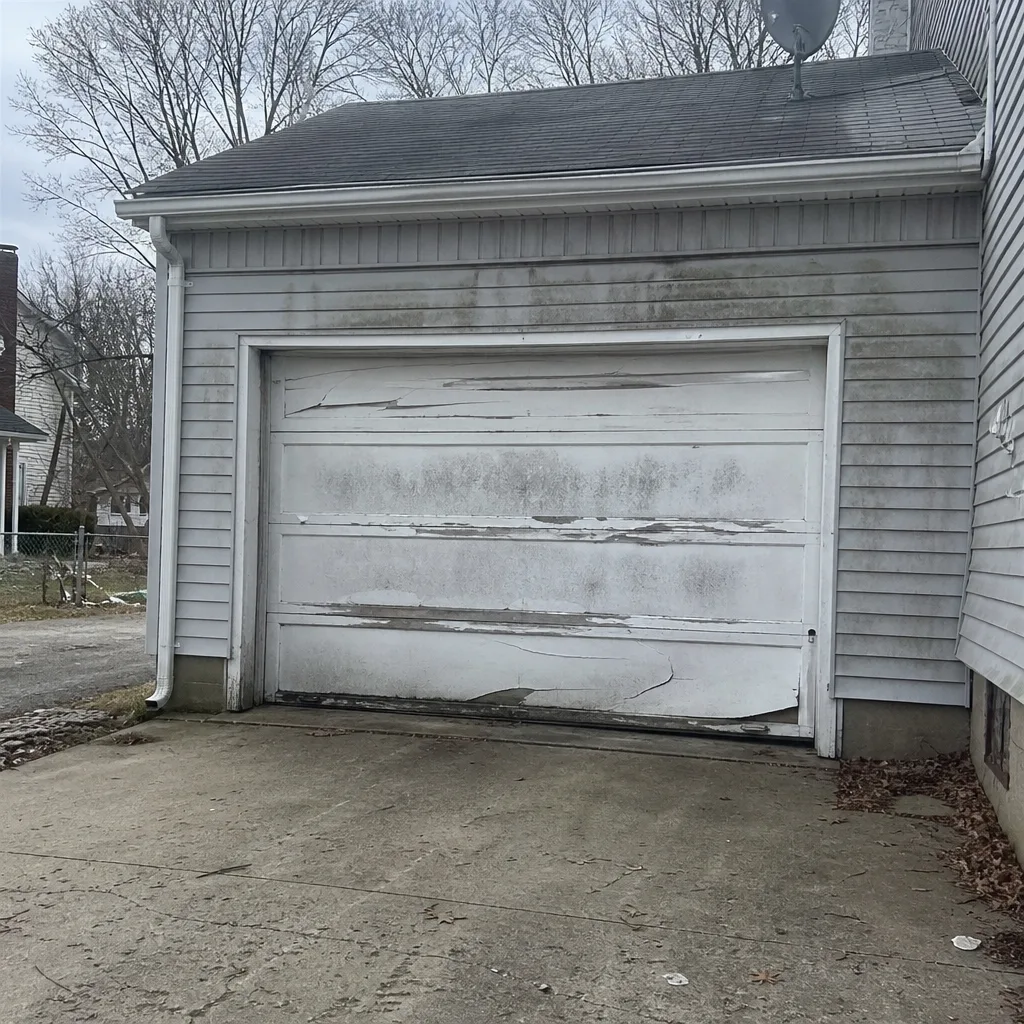 Before
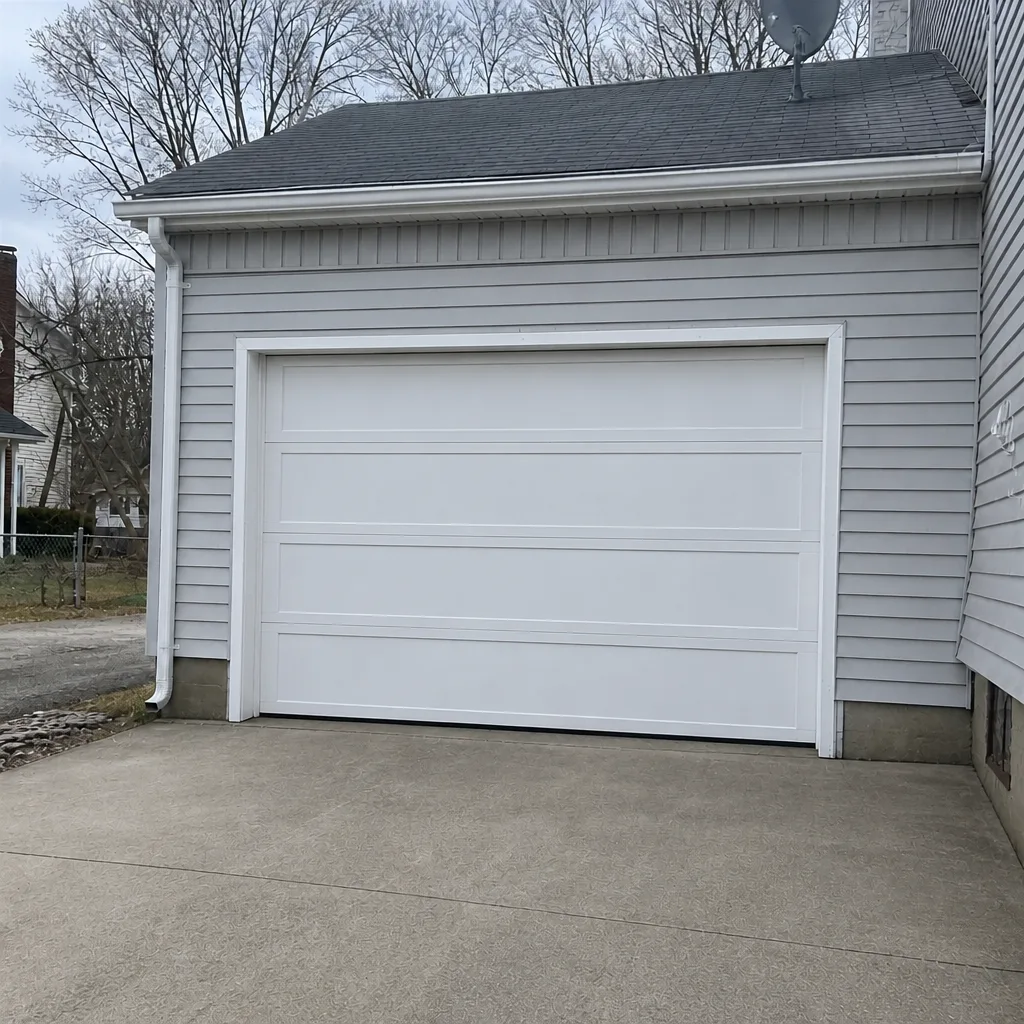 After
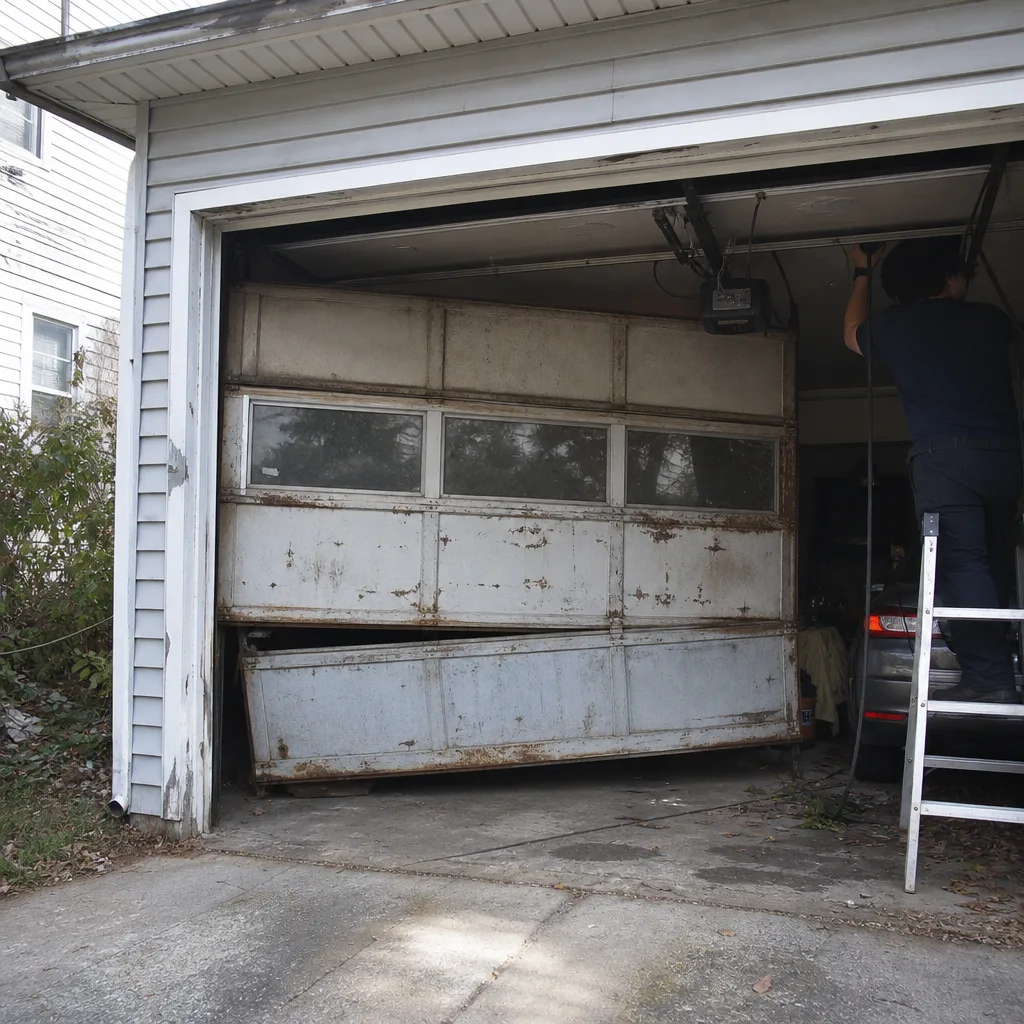 Before
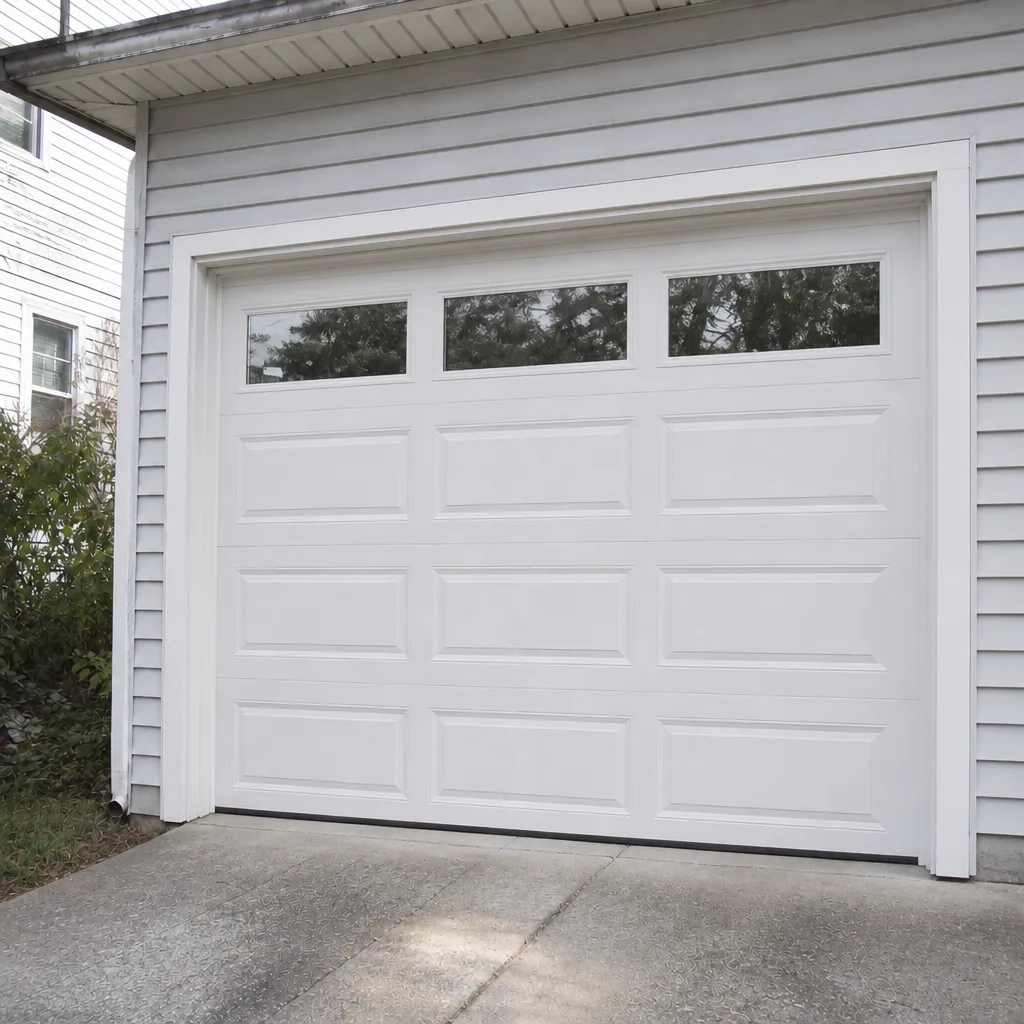 After
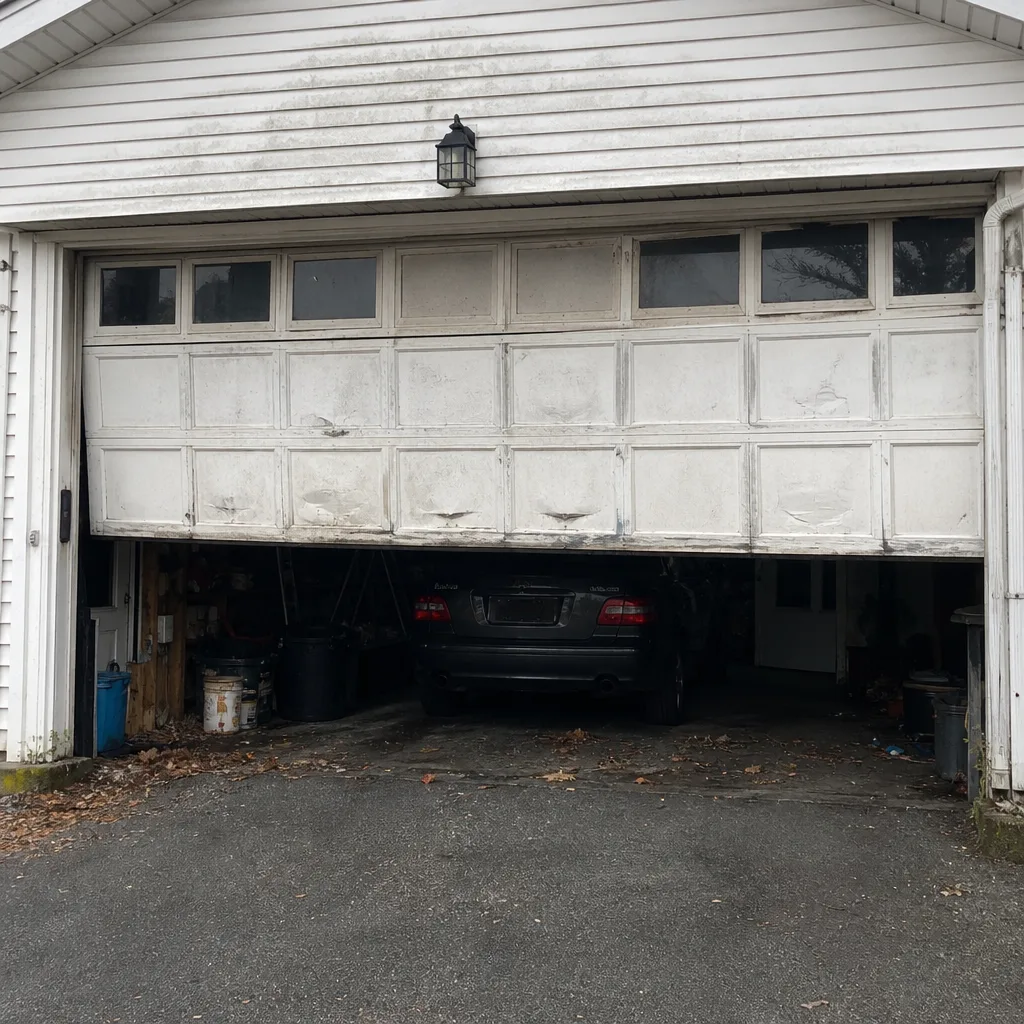 Before
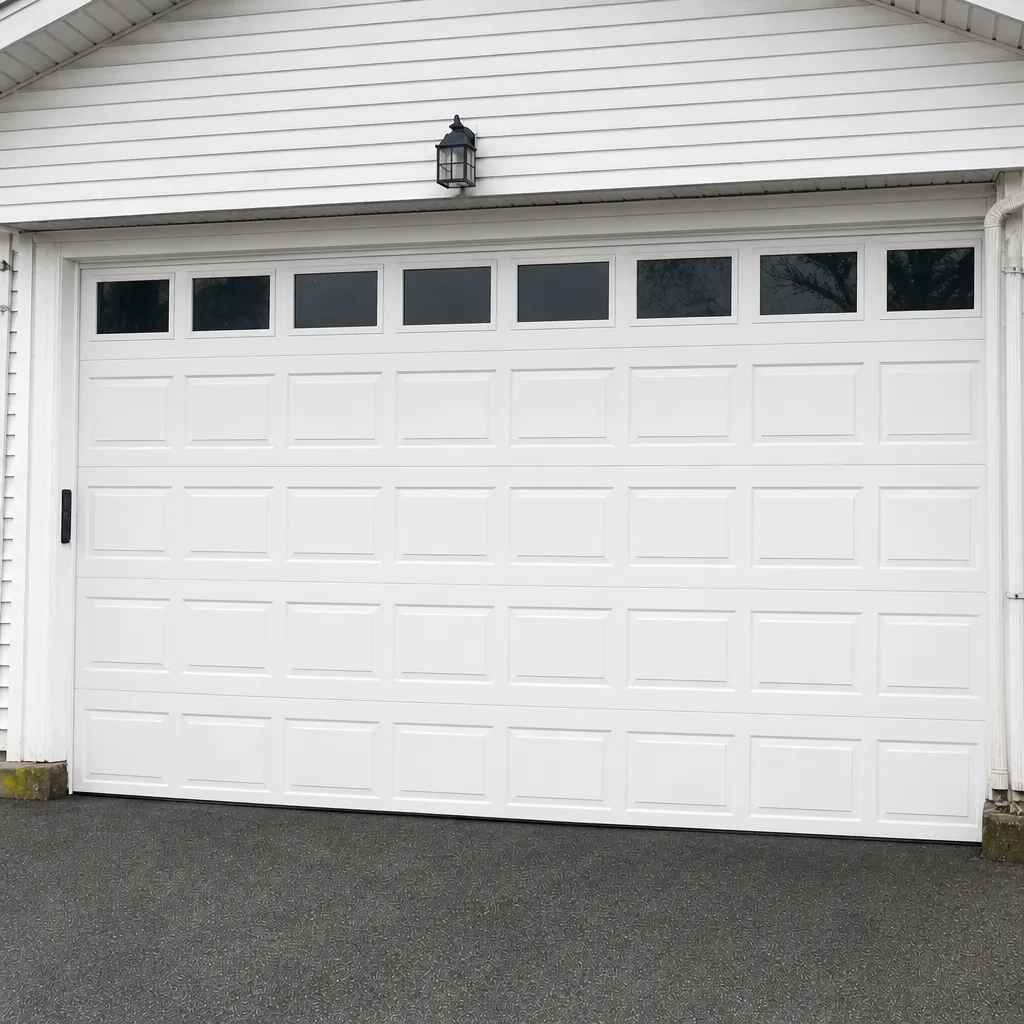 After
When to Call a Professional
If any of these apply, call us: a broken torsion or extension spring, a door that’s off its track or won’t open fully, any clicking, popping, or banging from near the springs or cables, a door that reverses at full force, an opener that hums without moving the door, or any visible cable damage or rust on load-bearing hardware. Those aren’t troubleshooting questions; they’re repair jobs, and they carry real safety risk. For smaller problems (a sensor lens with a cobweb, a remote needing a battery, a door that only reverses at one edge), the information in this guide can help you sort it quickly. Where it can’t, a technician can. Glacier Garage Door Repair offers free estimates in New Bedford, and we work on Clopay, Amarr, Wayne Dalton, Craftsman, LiftMaster, Chamberlain, Genie, and Raynor equipment, so the brand in your garage is the brand we know. Call (855) 360-9057. Our technicians have up to 13 years of experience.
Frequently Asked Questions
It’s most likely the safety sensors near the floor: misaligned lenses, dirty lenses, or an obstruction breaking the beam. Check that both sensor lights are steady, wipe the lenses, and clear the door’s path. If the door still reverses with a clear path, the opener’s close-force or travel-limit setting needs adjustment, which is technician work. Call (855) 360-9057 for a free estimate if the reversal continues.
No. Torsion springs store enough force that improper handling can cause severe injury or death. Replacement requires winding bars, controlled release, and matching the spring to the door’s weight, and a mistake can fail catastrophically. Treat it as a professional job, and don’t run the opener with a broken spring either, because the motor will be working against the full door weight. Call (855) 360-9057 to get it assessed.
A torsion spring replacement typically costs $180 – $340 per spring in this area, and a matched pair is usually about twice that because both sides are replaced together. Those are typical estimated ranges, and the written quote you receive sets the final price before any work starts. Call (855) 360-9057 for an exact quote, and we’ll weigh the door to size the spring correctly.
Because humidity swells wood sections, seals, and composite panels, and the resulting bind presses against the jamb or track. A door that sticks in humid weather and frees up in dry weather is showing a weather-related swelling symptom, not a motor problem. Some adjustment or a section repair usually settles it. Call (855) 360-9057 and we’ll look at the door and the seals together.
That’s a signal problem, not a door problem. A weak remote battery, an antenna wire hanging or damaged, or interference from electronics usually explains the gap between “works from the driveway” and “doesn’t work from the kitchen.” Start with a fresh battery and re-pair if needed. If it persists, the receiver in the opener may need attention. Call (855) 360-9057 and we’ll trace it.
Repair is usually the right call when the failure is mechanical and isolated: a spring, a roller set, a hinge, a sensor, or an opener part. Replacement makes more sense when the door is structurally compromised, or when repeated panel and hardware failures add up. Because we do both repair and installation, the recommendation isn’t steered by which pays more; it’s what the door actually needs. Call (855) 360-9057 for a free assessment.
The Bottom Line
A garage door problem is a message you can learn to read. Most failures land in four categories: mechanical wear (grinding, popping, a heavy door), misalignment (scraping, sticking, uneven travel), opener signal failure (no response, intermittent, reversing), and weather-related swelling (season-dependent sticking). Sort your symptom into a category and you’ll avoid the expensive wrong guesses: forcing a jammed door, greasing a track, or misdiagnosing a sensor as a dead motor. Know where DIY stops, at springs, cables, and the inside of the opener, and treat intermittent faults as active problems. A clear symptom report plus a written estimate is the fastest route to a door that opens and closes quietly.
If you’re in New Bedford and something about your door doesn’t sound right, we can help. Every estimate is free, and the price is quoted and agreed before any work starts. Call (855) 360-9057. We answer 24/7, with fast dispatch from 7am to 7pm, Sunday through Friday, closed Saturday.
Written by the team at Glacier Garage Door Repair.