
Last updated November 15, 2026
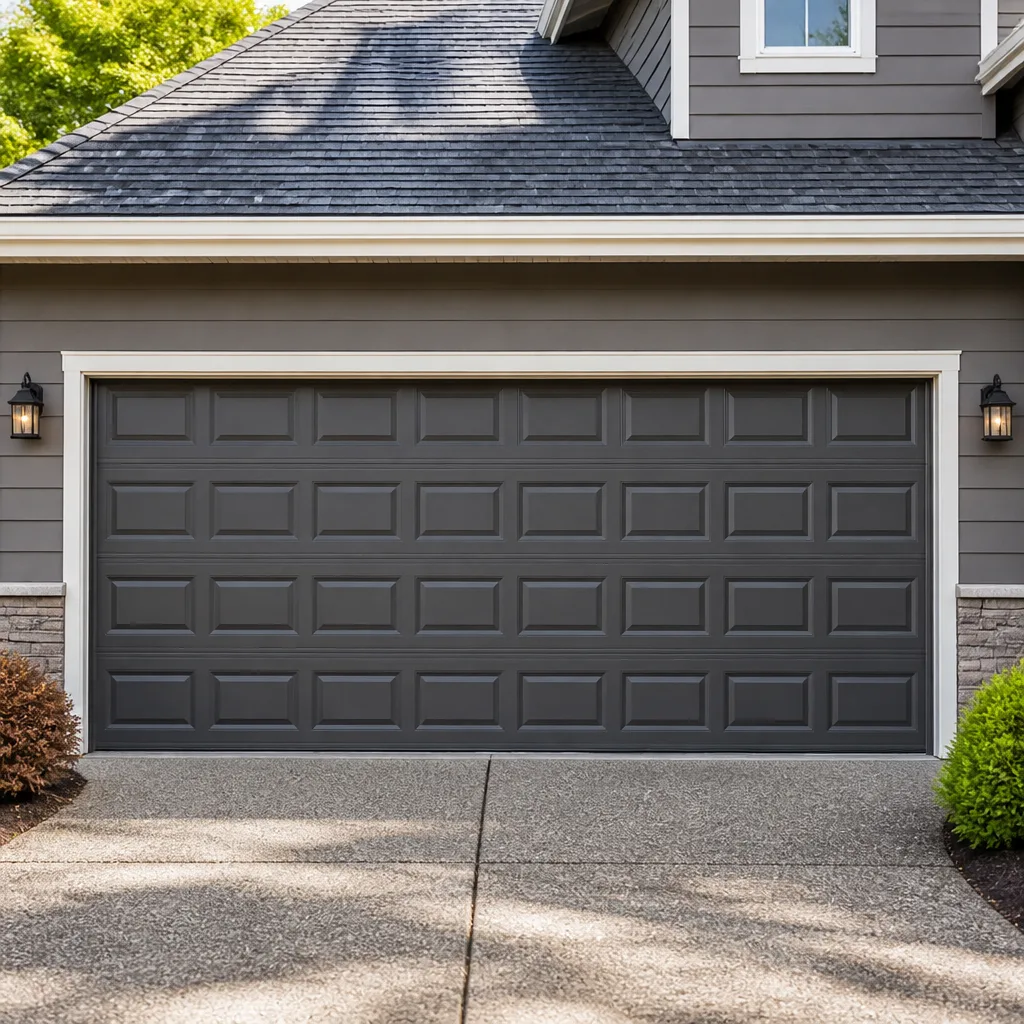 Raised-panel steel
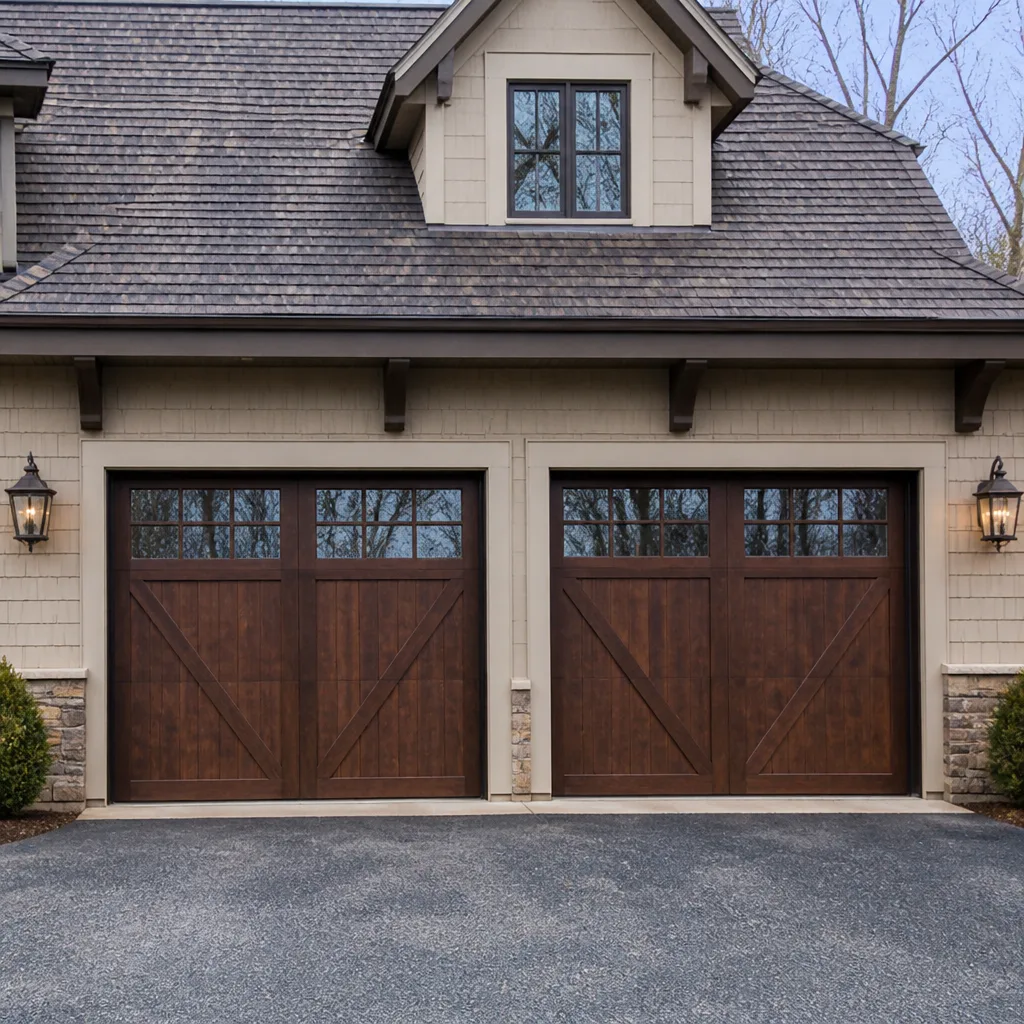 Carriage house
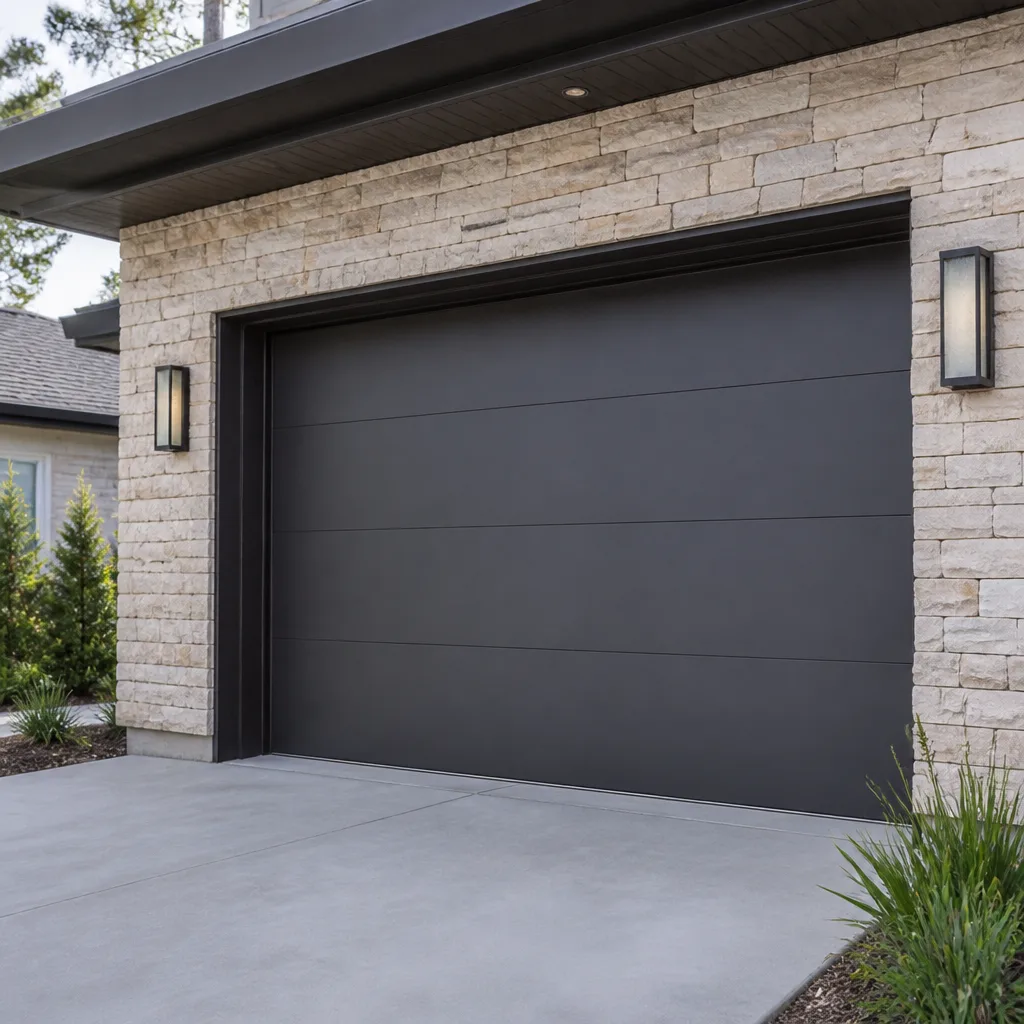 Modern flush
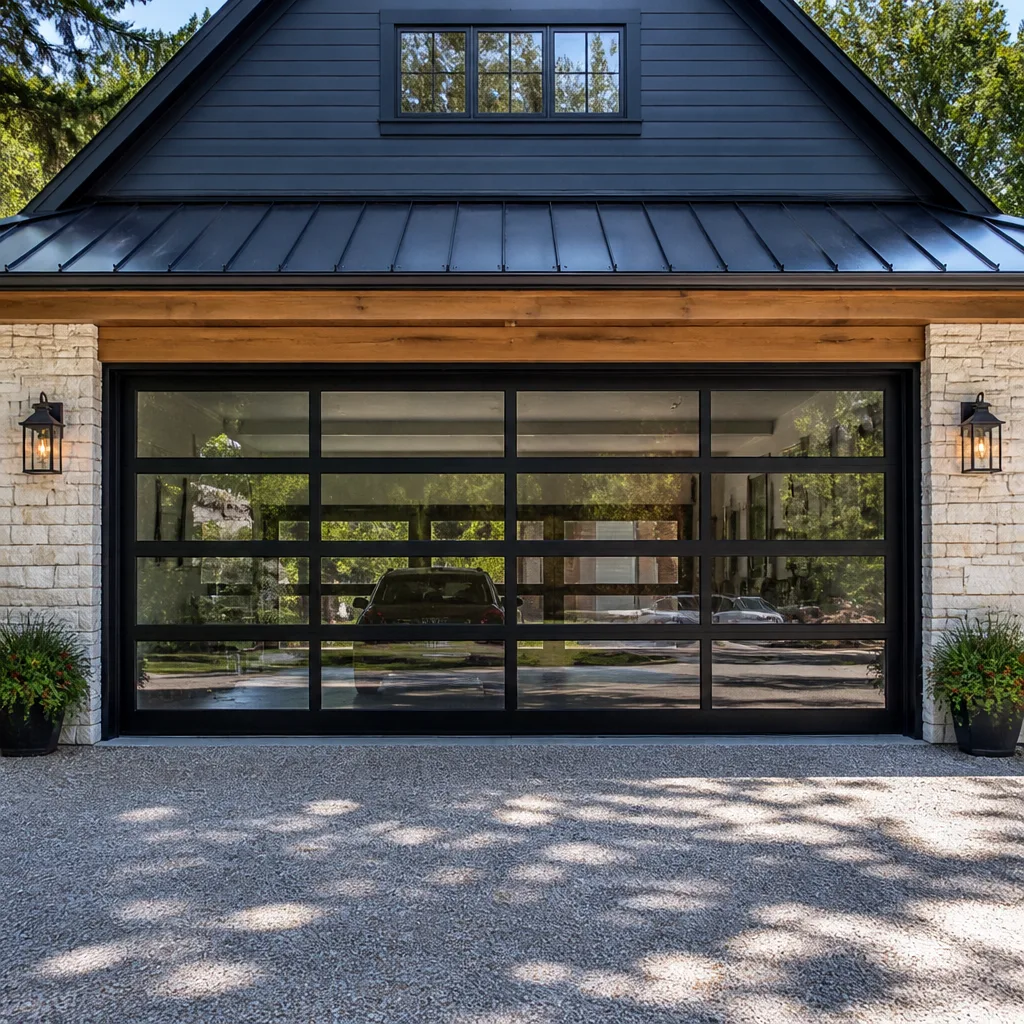 Full-view glass
 LiftMaster openers
 Chamberlain openers
Full 25-point door and opener safety check with every visit - springs, cables, rollers, tracks, and your LiftMaster or Chamberlain opener included
You get a price before we start. It does not change when the pro arrives.
Get your free estimateSeasonal Garage Door Care for New Bedford: Year-Round Homeowner’s Guide
October is the most important garage door maintenance month in New Bedford, and almost nobody treats it that way. By the time January arrives with its hard freezes, the small failures that started in autumn have already turned into snapped springs, frozen hinges, and openers that strain against a door that suddenly feels twice as heavy. The mistake most homeowners make is thinking about their garage door only when it stops working. A door that runs quietly in July can be weeks away from a breakdown in February, and the warning signs are almost always there if you know where to look. This guide walks through what each season does to a garage door in New Bedford, what to check before the weather turns, and how to build a care routine you’ll actually keep.
Quick Answer
Garage doors in New Bedford need four distinct seasonal checkpoints: a fall prep before the first freeze (seal, lubricate, test balance), a winter awareness of how cold affects spring tension, a spring inspection after freeze-thaw damage, and a summer pass to slow corrosion on hardware. The single most valuable step is a thorough October tune-up before temperatures drop. Skip it, and the repair bill in January usually costs more than the maintenance would have.
Styles & brands we work with
- Raised-panel steel
- Carriage house
- Modern flush
- Full-view glass
- LiftMaster openers
- Chamberlain openers
Table of Contents
- Why Seasonal Care Matters More in New Bedford
- Fall Prep: The October Checklist Before the First Freeze
- Winter: Why Your Door Suddenly Feels Heavy
- Spring Inspection: What Freeze-Thaw Cycles Leave Behind
- Summer: Managing Humidity and Corrosion on Hardware
- The Seasonal Reference Card
- Common Mistakes to Avoid
- When to Call a Professional
Why Seasonal Care Matters More in New Bedford
A garage door in New Bedford lives through four genuinely different climates in a single year. That’s not a figure of speech. The region swings from humid summers with heavy dew and afternoon thunderstorms to winters with hard freezes, nor’easters, and freeze-thaw cycles that can run several times in a week. Each of those conditions attacks a different part of the door system.
Summer humidity works on the metal hardware: hinges, rollers, and the track. Winter cold works on the torsion spring and the opener’s drive mechanism. Fall and spring are the transition windows when you have the best chance to catch problems before they compound. Nor’easters add wind load and driving rain, which test the weather seal and the bottom rubber along the full width of the door.
What makes this manageable is that the checks are predictable. Every season has a short list of components worth looking at, and the list barely changes from year to year. The problem isn’t complexity. It’s that most homeowners don’t know the list exists.
There’s also the housing factor. New Bedford has a large stock of older homes, many with garages that have been added, converted, or rebuilt over the years. Doors in that situation often have mixed-age hardware: a newer opener driving an older door, or replacement panels on original tracks. Mixed hardware responds differently to temperature swings than a matched system does. That’s one reason we treat the door and the opener as one integrated system rather than two separate machines. A Glacier Garage Door Repair diagnosis looks at both together, because a problem in one often shows up as a symptom in the other.
If your door is already misbehaving, don’t wait for the next seasonal checkpoint. For repair work we offer same-day service and free estimates, and you can reach us at (855) 360-9057. We answer 24/7. Fast dispatch from 7am to 7pm, Sunday through Friday.
Fall Prep: The October Checklist Before the First Freeze
October is when the door needs the most attention and gets the least. The goal of fall prep is simple: get everything into a stable state before the first hard freeze, because once temperatures drop, small issues get expensive fast. Here’s the order we recommend.
1. Test the door’s balance by hand
Disconnect the opener (most openers have a manual release cord) and lift the door halfway by hand. It should stay roughly where you put it with light effort. If it drops on its own, the springs are losing tension. If it’s hard to lift, something is binding. A balanced door is the baseline for everything else, and an unbalanced one puts strain on the opener all winter.
2. Lubricate hinges, rollers, and the torsion spring
Use a garage-door-specific lubricant, not WD-40 or general household oil. Work it into each hinge knuckle, each roller stem, and along the torsion spring. Avoid the tracks themselves; those should stay clean and dry. This is the single easiest job that prevents winter sticking.
3. Check the weather seal along the bottom
Run your hand along the bottom rubber from inside the garage with the door closed. Any gap lets cold air and driven rain in. In a New Bedford nor’easter, that gap becomes a source of water on the floor and ice at the threshold. A seal that’s cracked, torn, or flattened needs replacing before winter, not after.
4. Inspect the tracks for alignment
Look down each track from the floor. It should be straight and parallel to the door edge. Bent tracks bind the rollers and force the opener to work harder, and that extra strain shows up as a burned-out motor or a stripped gear once the cold makes everything stiffer.
5. Test the safety reverse
Place a small object in the door’s path and close it. The door should reverse on contact. If it doesn’t, the opener needs adjustment before winter, since a door that reverses unreliably is a genuine hazard. This matters whether you have a LiftMaster, a Chamberlain, or a Genie unit; the test is the same across brands.
- Disconnect the opener and test balance by hand
- Lubricate hinges, rollers, and the torsion spring
- Inspect and replace the bottom weather seal if needed
- Straighten or report any bent track sections
- Test the safety reverse with an object in the path
- Clear leaves and debris from the tracks and threshold
Do this once in October and the door enters winter in a known state. If any step raises a flag, garage door repair is cheaper in autumn than in a January cold snap. Call (855) 360-9057 for a free estimate on anything that looks wrong. We answer 24/7. Fast dispatch from 7am to 7pm, Sunday through Friday.
Winter: Why Your Door Suddenly Feels Heavy
This is the question we get most often between December and March: the door worked fine in November, and now it feels heavy, slow, or doesn’t open at all. The answer almost always comes down to torsion spring tension and cold metal.
A torsion spring is a coiled steel wire under significant tension. Cold steel contracts slightly and becomes less elastic, which changes the effective force the spring delivers. At the same time, the grease in the hinges and rollers thickens, and the door’s own metal components tighten up. The net result is a door that feels noticeably heavier in January than it did in October, even with nothing technically broken.
That extra weight is what kills openers. An opener sized for a balanced door in mild weather will labor against a stiffer door in a hard freeze. If the spring has lost any tension at all over the summer and fall, winter is when the combination becomes too much. The opener strips a gear, or the motor overheats and quits.
Which is why the October prep matters so much. A balanced, well-lubricated door loses far less performance in the cold.
What to watch for in winter
- Slow or labored opening. The opener is working harder than it should. Address it before the motor fails.
- The door opens a foot then reverses. Often a safety sensor issue worsened by cold or by a small obstruction. Check the sensor alignment first.
- A loud bang from the garage. That’s usually a torsion spring breaking, and it’s a job for a professional, full stop.
- Frozen bottom seal. If the door is stuck to the floor, don’t force it. Free the seal by hand before running the opener.
- Ice in the tracks. Clear it gently. Never chip at ice with a metal tool inside the track.
One safety caveat we don’t soften: torsion springs store enormous force, and a broken spring can injure anyone who tries to handle it. Do not attempt to replace, adjust, or rewind a torsion spring yourself. This is a job for a trained technician with the right tooling, and it’s a repair we handle routinely.
If your door fails in winter, call (855) 360-9057. We offer same-day service and a free estimate. We answer 24/7. Fast dispatch from 7am to 7pm, Sunday through Friday.
Spring Inspection: What Freeze-Thaw Cycles Leave Behind
Spring is the season of discovery. Once the ground thaws and temperatures stabilize, the cumulative damage from a New Bedford winter becomes visible. Freeze-thaw cycles are the culprit, and they’re relentless in this climate. Water works into small gaps, freezes, expands, and then thaws, and every cycle widens the gap slightly.
The components that show this damage first are predictable.
The specific wear points to check
- Torsion spring. Cold-weather cycles and the extra load through winter shorten spring life. If the door has lost balance, the spring is the first place a technician looks.
- Hinges. The pins develop play, and rusty hinges seize. A hinge that’s frozen open lets the roller drift out of the track.
- Rollers. Nylon rollers crack in the cold. Steel rollers rust. Both cause the door to drag and vibrate.
- Cables. The cables run from the bottom corners of the door up the side. Frayed or rusted strands are a safety concern and should be replaced, not repaired.
- Bottom seal. A seal that survived the fall may not survive the freeze-thaw at the threshold. Check for cracks and separation.
- Weatherstripping around the frame. The perimeter seal takes wind and water load and shows cumulative wear.
Spring tune-up steps
- Open and close the door slowly by hand to listen for grinding, scraping, or popping.
- Inspect rollers and hinges for cracks, rust, or play.
- Look at the cables at the bottom corners for fraying.
- Check the balance test again (disconnect opener, lift halfway).
- Replace a worn bottom seal before the humid season starts.
- Call a professional for anything involving springs or cables.
A spring tune-up is also the best time to look at the opener. If your garage door opener repair is overdue, the technician can diagnose it alongside the door. A Craftsman unit that’s been struggling all winter may just need a force adjustment, or it may be telling you the motor is on its way out. Better to know in April than in another January. Call (855) 360-9057 for a free estimate.
Summer: Managing Humidity and Corrosion on Hardware
Summer in New Bedford brings humidity, and humidity is what does the long, slow damage to garage door hardware. It’s easy to ignore because there’s no dramatic failure, just a gradual buildup of surface rust on the hinges and rollers. Over several summers, that rust becomes structural.
The goal of summer care is to slow corrosion between professional service visits. A few habits make a real difference.
Keep the hardware dry and clean
A quick wipe-down of the hinges and rollers with a dry cloth every few weeks removes the fine layer of dust and moisture that starts the rust process. Don’t wash the tracks with water; use a damp cloth and dry them immediately. The tracks should stay as dry as possible.
Re-lubricate mid-summer
The fall lubricant has thinned out by July. A light second application on hinges and the torsion spring takes a few minutes and buys months of smoother operation. Rollers benefit from a drop of lubricant at the stem, not on the wheel face.
Watch the bottom seal in rain
Summer thunderstorms can push water under a seal that looked fine in dry weather. If you see dampness at the door threshold after storms, the seal is doing less than it should. Replace it before fall so the fall checklist starts from a solid baseline.
Inspect the opener housing
The opener sits in the garage, which in summer becomes the hottest room in the house. Dust buildup on the unit’s housing reduces cooling and shortens motor life. Vacuum the exterior housing once a year. Don’t open the unit itself; that’s a technician’s job. Whether it’s an Amarr door on a LiftMaster opener or a Clopay door on a Genie, the maintenance rhythm is the same.
Corrosion prevention in one sentence
Keep metal dry, lubricated, and inspected, and rust stays cosmetic instead of structural.
If you notice rust that’s eating into the hinges or a roller that’s seized hard, don’t wait for it to spread. Call (855) 360-9057 for a free estimate. We answer 24/7. Fast dispatch from 7am to 7pm, Sunday through Friday.
The Seasonal Reference Card
Here’s the practical version. Cut this out, tape it inside the garage door frame, and run through it at the start of each season. It takes about fifteen minutes per season and prevents the majority of the repair calls we see.
October (Fall)
- Balance test: door stays put at halfway point
- Lubricate hinges, rollers, torsion spring
- Inspect bottom seal; replace if cracked or flattened
- Check track alignment for bends
- Test safety reverse with an object
- Clear debris from tracks and threshold
January (Winter)
- Listen for new sounds: bangs, grinding, scraping
- Watch for labored opening or partial reversal
- Free a frozen bottom seal by hand before using the opener
- Clear ice from tracks gently
- Never touch a broken torsion spring
April (Spring)
- Inspect rollers and hinges for cracks, rust, play
- Check cables at bottom corners for fraying
- Repeat the balance test
- Replace worn bottom seal before humid season
- Have springs and cables inspected by a technician
July (Summer)
- Wipe hinges and rollers dry every few weeks
- Light re-lubrication of hinges and spring
- Check threshold for dampness after storms
- Vacuum opener housing exterior
- Note any rust that’s spreading rather than surface-level
Alongside the seasonal list, there’s a shorter weekly rhythm worth adopting. Walk past the door, open it, and listen. A garage door that’s healthy is quiet and predictable. Any change in sound or speed is worth noting, and if a change persists past a week, it’s worth a call.
Common Mistakes to Avoid
- Skipping October entirely. The single most common pattern we see is a door that went into winter with a slightly weak spring and a dry track. The cold finishes the job. Treat October as the mandatory checkpoint, not an optional one.
- Using WD-40 as a lubricant. It’s a solvent, not a long-term lubricant. It displaces moisture, then leaves the hardware drier than before. Use a garage-door-specific lubricant on hinges, rollers, and springs.
- Lubricating the tracks. The tracks should be clean and dry. Lubricant in the tracks collects dust and gums up the rollers, which is the opposite of what you want.
- Ignoring a slow-reversing door. A door that reverses slowly or intermittently is a safety issue, not a quirk. Test it once a season and adjust or repair anything that fails the test.
- Forcing a frozen door with the opener. If the seal is stuck to the floor, the opener will pull against it and can damage the motor or the door panel. Free the seal by hand first, every time.
- Attempting spring or cable work. This is the mistake with real injury potential. Torsion springs and cables store dangerous force and require specific tooling. Leave them to a technician.
- Replacing the door when a repair would do. A door that’s loud, slow, or off its tracks is usually repairable. Get a repair quote before you consider replacement, and check that the person quoting you has the expertise to make an honest call in both directions.
See the difference
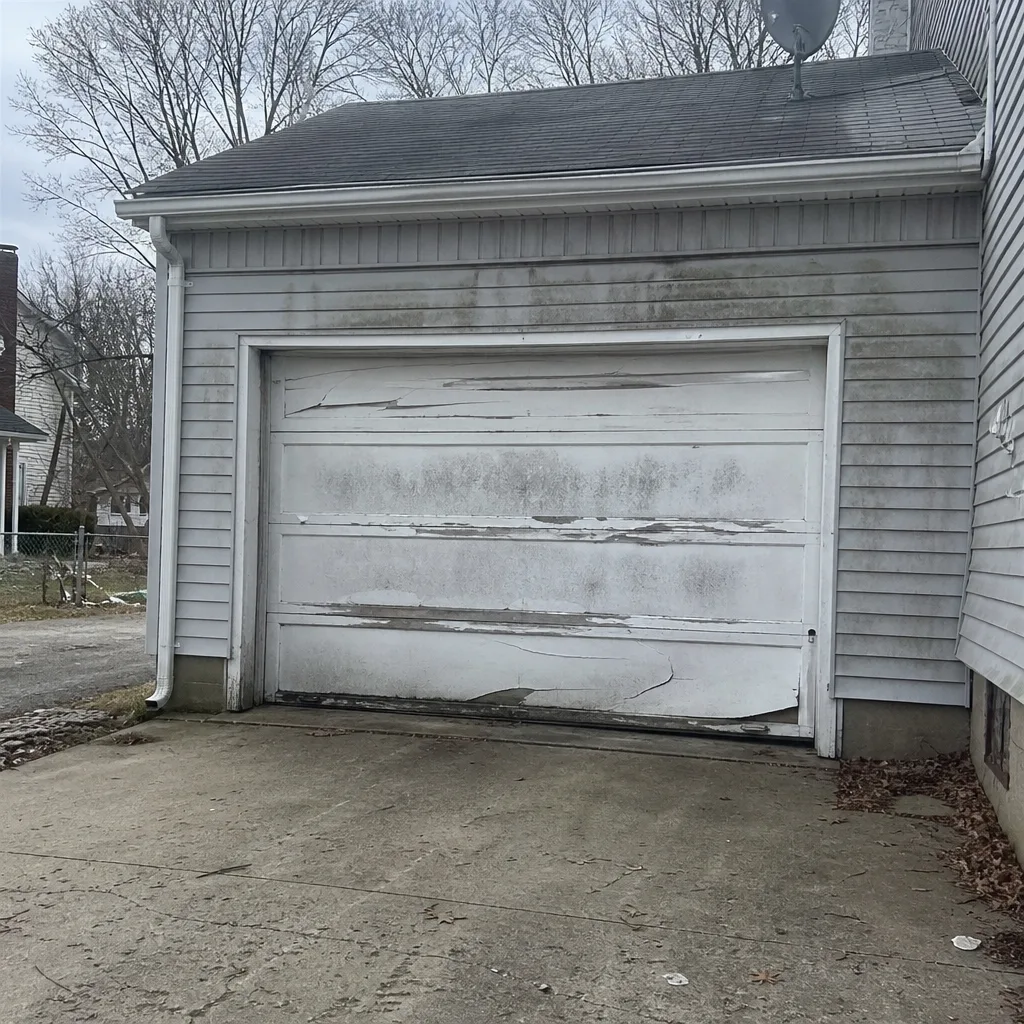 Before
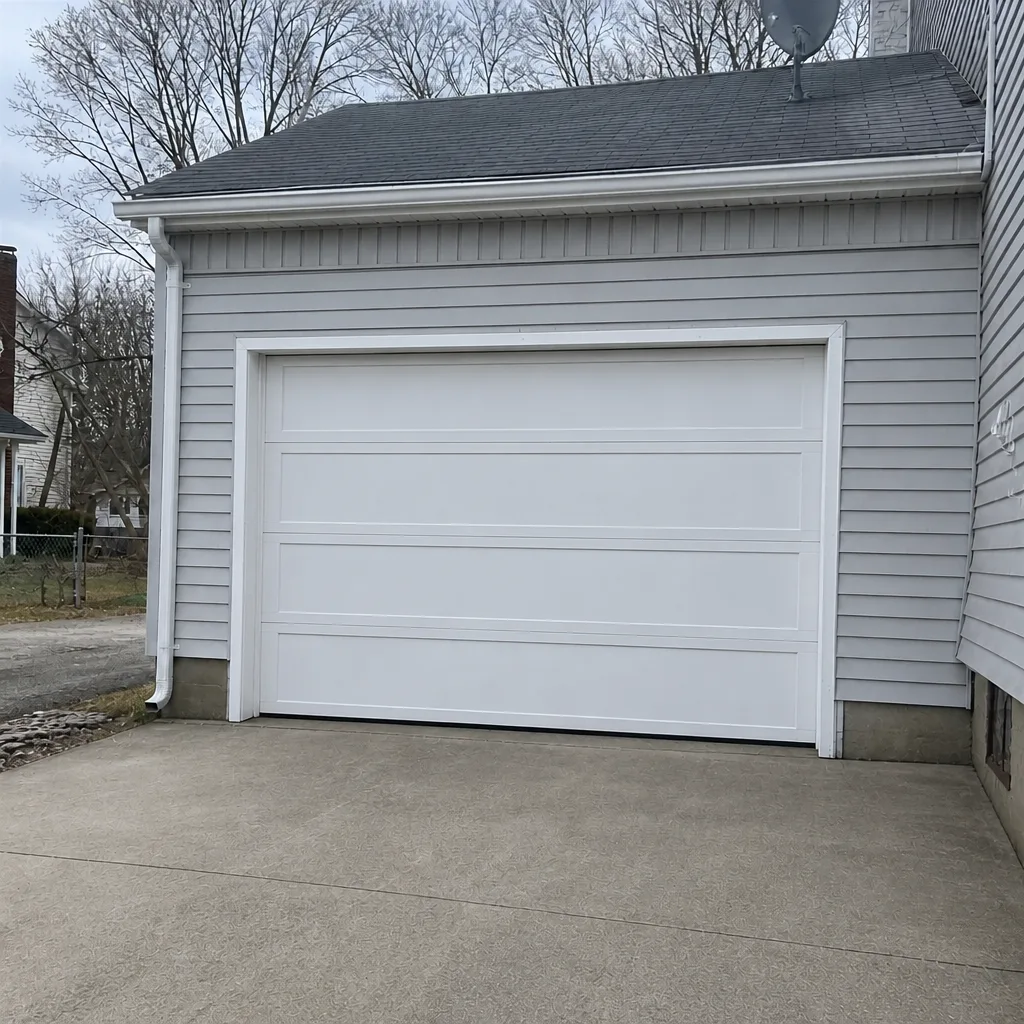 After
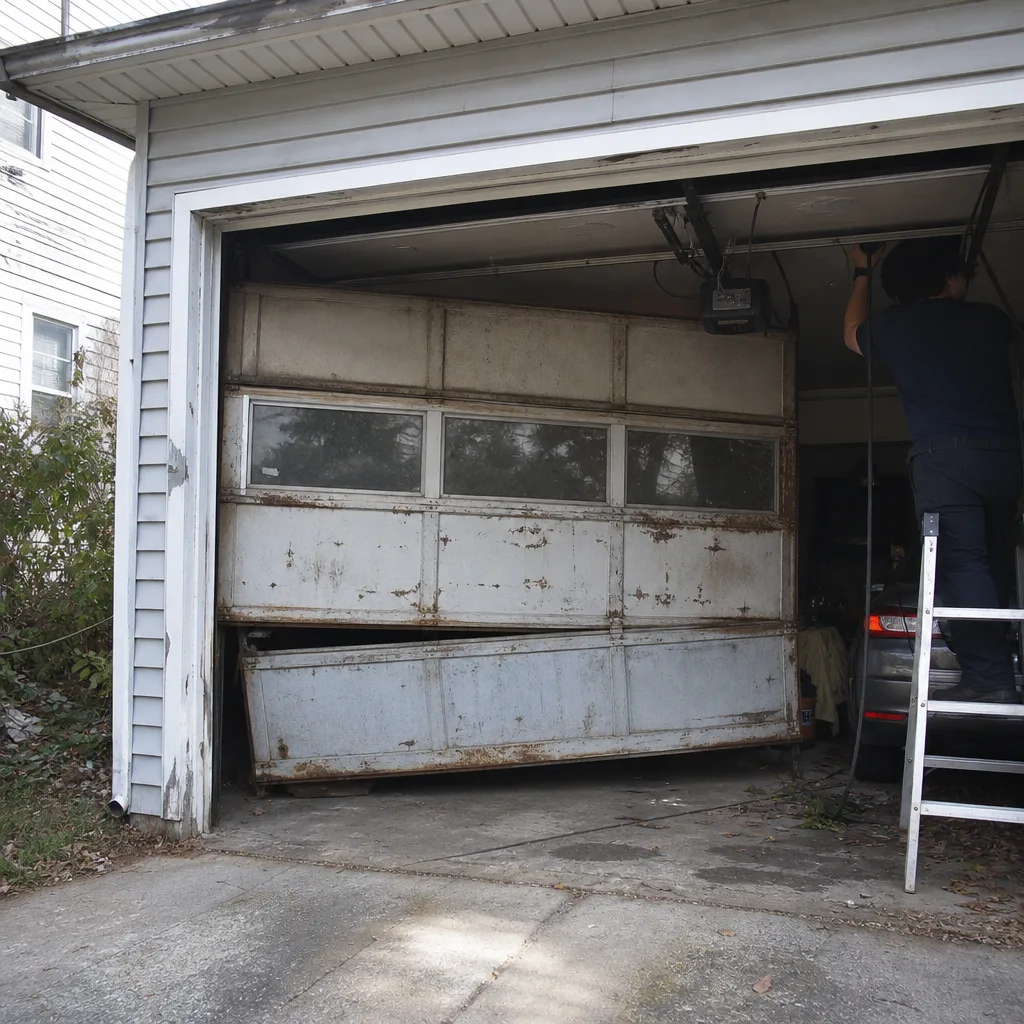 Before
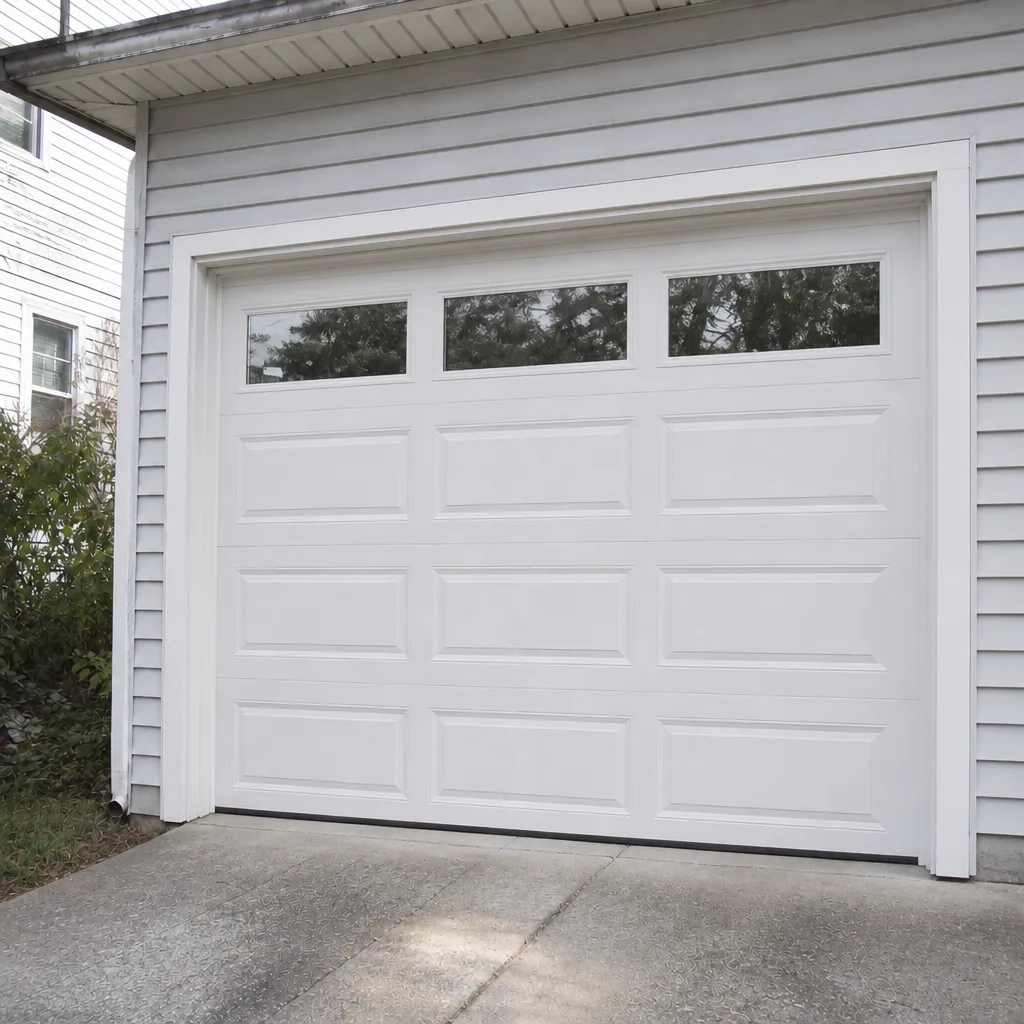 After
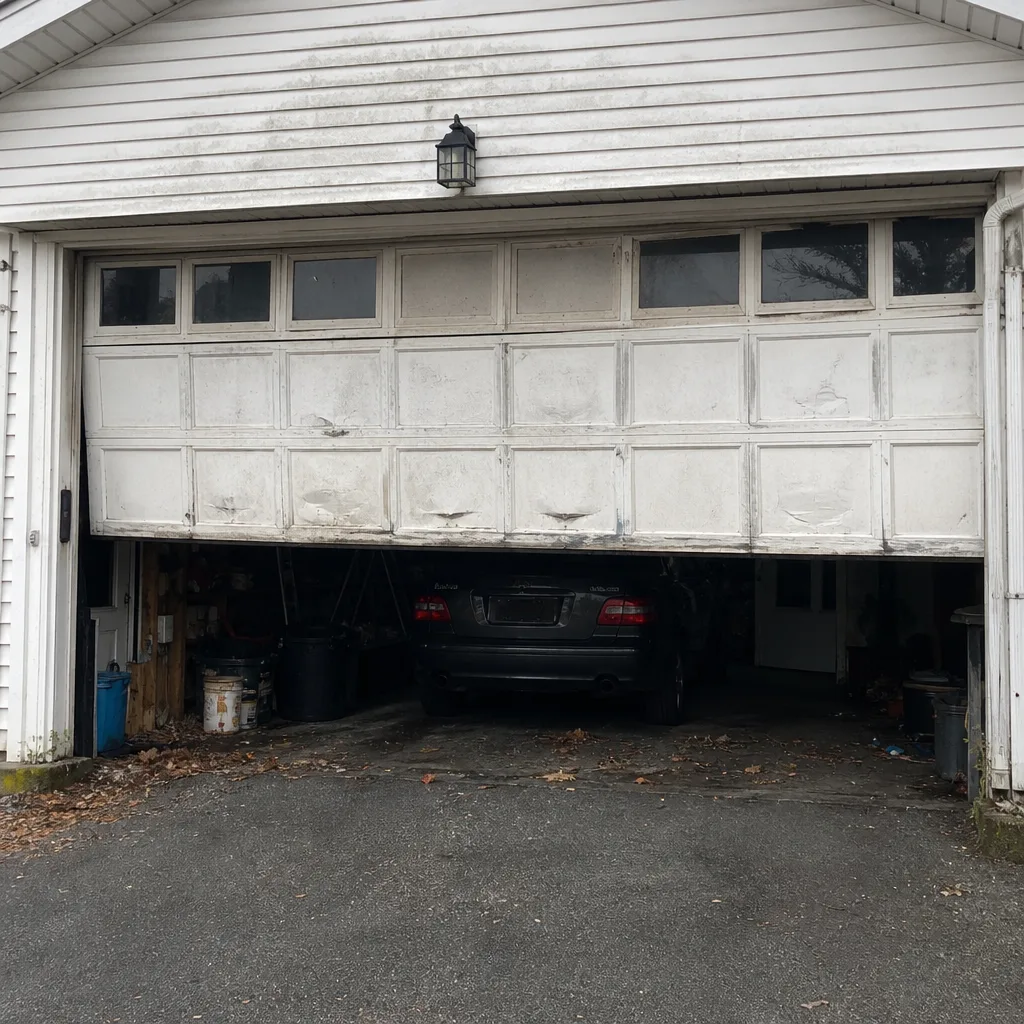 Before
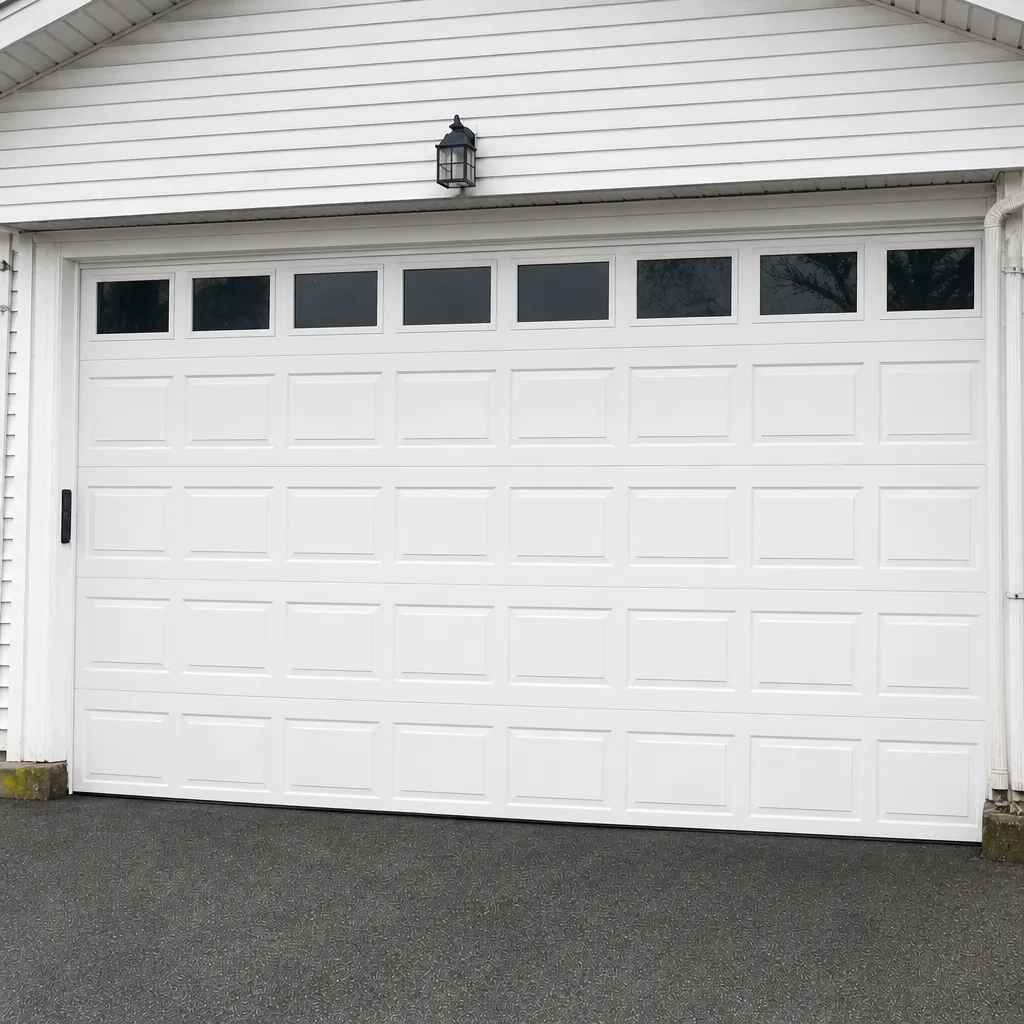 After
When to Call a Professional
Some seasonal care is squarely homeowner territory: wiping down hardware, testing the balance, checking the seal, listening for new sounds. Other jobs need a technician, and knowing the line saves both money and risk. Call a professional when you hear a bang from the garage, when the door won’t stay balanced after a spring replacement window has passed, when the cables look frayed, when the door comes off the track, when the opener runs but the door doesn’t move, or when the safety reverse fails and adjustment doesn’t fix it. Also call if the door is more than a couple of inches off-level at rest; that’s a tension or track problem showing itself. Glacier Garage Door Repair offers free estimates in New Bedford. Call (855) 360-9057. We answer 24/7. Fast dispatch from 7am to 7pm, Sunday through Friday. We work on the brand already in your garage across Chamberlain, Clopay, Amarr, Genie, LiftMaster, Wayne Dalton, Craftsman, and Raynor, and our technicians have up to 13 years of experience.
Frequently Asked Questions
Once a year is the baseline, and the best month for it is October, right before the first freeze. That annual service covers the balance test, lubrication, spring and cable inspection, and safety reverse check. Homeowners who want maximum reliability do a lighter seasonal pass in spring and summer too, mostly seal checks and re-lubrication. The full professional tune-up once a year prevents most winter failures.
Cold steel contracts, the torsion spring delivers less effective force, and the lubricant in the hinges and rollers thickens. The door itself hasn’t changed; the conditions around it have. If the door was already slightly out of balance in autumn, winter makes it obvious. A free estimate will tell you whether a spring adjustment or replacement is the fix. Call (855) 360-9057 to book one.
Yes, and you should. Lubricating hinges, rollers, and the torsion spring is a homeowner-safe job that takes about fifteen minutes with a garage-door-specific lubricant. Keep the tracks clean and dry, and don’t use household oil or WD-40 as a substitute. Anything involving springs, cables, or track realignment is a technician’s job.
It sounds like a sharp, loud bang from the garage, often followed by the door refusing to open or a visible gap in the spring coil. It’s one of the most recognizable sounds in the trade, and it always means a technician visit. Don’t try to lift the door by hand after a spring breaks; it’s far heavier than usual. Call (855) 360-9057 and we’ll schedule a repair.
It is, though the damage is gradual rather than dramatic. Humid air plus dust forms a fine film on hinges and rollers that starts surface rust. Left alone across several summers, that rust works into the hinge pins and roller stems and causes sticking and binding. A monthly wipe-down and a mid-summer re-lubrication slow it down considerably.
Repair first, in most cases. A door that’s loud, slow, or off its tracks is usually fixable with spring, roller, hinge, or cable work, and that’s far cheaper than replacement. Replacement makes sense when the panels are structurally compromised or the door has been repaired repeatedly in a short window. We work on repair and installation both, so a recommendation on fix versus replace doesn’t tilt toward one outcome. Free estimates in New Bedford: (855) 360-9057.
The Bottom Line
The seasonal care plan comes down to one idea: a garage door in New Bedford faces four different climates a year, and each one needs its own check. October is the critical month, because a balanced, lubricated, sealed door enters winter in a known state and loses far less performance in the cold. Winter asks you to listen and notice. Spring asks you to inspect what freeze-thaw left behind. Summer asks you to keep the hardware dry. Every step on the seasonal card is something you can do yourself, except the ones involving springs and cables, which belong to a technician. The full system, door and opener together, is what we look at, because a door problem and an opener problem are rarely separate for long. Call (855) 360-9057 for a free estimate in New Bedford. We answer 24/7. Fast dispatch from 7am to 7pm, Sunday through Friday.
Written by the team at Glacier Garage Door Repair.